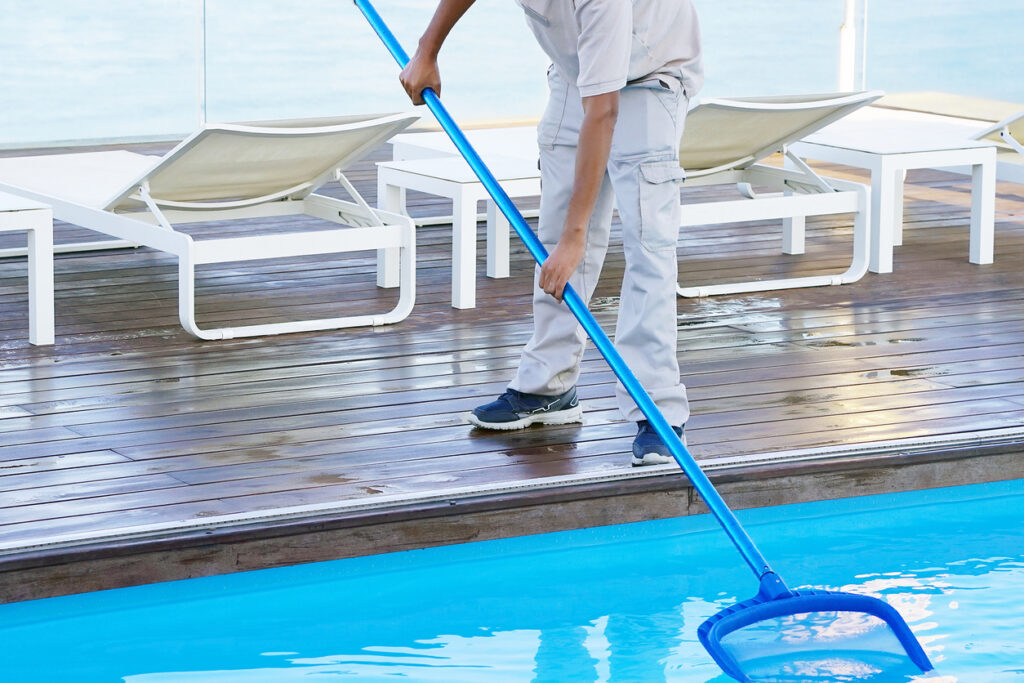
Operating a commercial swimming pool is about much more than keeping the water looking clean. Hotels, apartment communities, HOAs, fitness centers, schools, and public aquatic facilities all depend on proper maintenance to protect swimmers and comply with health department regulations.
Whether you’re a property manager, maintenance technician, or preparing for your Certified Pool Operator (CPO)certification, following a consistent maintenance schedule can help prevent costly repairs, failed inspections, and unsafe swimming conditions.
In this guide, we’ll cover the essential daily, weekly, and monthly maintenance tasks every commercial pool operator should know.
Why a Pool Maintenance Checklist Matters
Commercial pools experience heavy use every day. Without a structured maintenance routine, small problems can quickly become expensive repairs or health hazards.
A proper maintenance checklist helps you:
- Maintain safe swimming conditions
- Extend the life of pool equipment
- Reduce chemical costs
- Prevent algae and bacteria growth
- Pass health department inspections
- Reduce liability for your business
A well-maintained pool also creates a better experience for guests, residents, and customers.
Daily Commercial Pool Maintenance Checklist
Daily inspections are the foundation of proper pool management.
Test Water Chemistry
Check and record:
- Free chlorine or sanitizer levels
- pH
- Total alkalinity (as needed)
- Water temperature
Maintaining balanced water chemistry keeps swimmers safe while helping sanitizers work effectively.
Inspect Water Clarity
The water should always be:
- Clear
- Free of debris
- Free of algae
- Free of excessive foam
If you cannot clearly see the main drain, the pool should be closed until the issue is corrected.
Empty Skimmer and Pump Baskets
Leaves, insects, and debris reduce water circulation.
Cleaning baskets daily improves filtration efficiency and reduces stress on pumps.
Check Pool Equipment
Inspect:
- Pumps
- Filters
- Heaters
- Chemical feeders
- Pressure gauges
Look for unusual noises, leaks, or warning signs before they become major repairs.
Inspect Pool Deck and Safety Equipment
Verify that:
- Drain covers appear secure
- Handrails are stable
- Rescue equipment is available
- Safety signs remain visible
- Walkways are clean and slip-resistant
Safety inspections should never be skipped.
Weekly Pool Maintenance Checklist
Weekly maintenance keeps systems operating efficiently.
Brush Pool Walls and Floor
Brushing removes dirt and algae before they become larger problems.
Pay special attention to:
- Corners
- Steps
- Tile lines
- Waterline areas
Vacuum the Pool
Vacuuming removes dirt that filters may not capture.
Even pools with automatic cleaners benefit from periodic manual inspections.
Backwash or Clean Filters
Depending on the filter type and pressure readings, clean or backwash filters to maintain proper water circulation.
Dirty filters reduce efficiency and increase operating costs.
Inspect Chemical Storage
Properly store pool chemicals by:
- Keeping containers sealed
- Separating incompatible chemicals
- Maintaining dry storage areas
- Checking expiration dates
Safe chemical storage protects both employees and facilities.
Monthly Pool Maintenance Checklist
Monthly inspections focus on long-term equipment performance.
Inspect Pumps and Motors
Check for:
- Leaks
- Vibration
- Bearing noise
- Loose fittings
Early detection prevents expensive equipment failures.
Test Safety Equipment
Confirm that:
- Rescue hooks are available
- Life rings are in good condition
- First-aid supplies are stocked
- Emergency phones function properly
Review Maintenance Records
Review your maintenance logs for recurring issues such as:
- Frequent pH fluctuations
- High chemical usage
- Equipment repairs
- Water loss
These trends often reveal larger problems before they become emergencies.
Common Pool Maintenance Mistakes
Even experienced operators occasionally make mistakes.
Common issues include:
- Waiting too long to test water
- Ignoring filter maintenance
- Adding chemicals incorrectly
- Poor record keeping
- Delaying equipment repairs
- Not calibrating testing equipment
Avoiding these mistakes can save thousands of dollars each year.
Why Certified Pool Operator Training Makes a Difference
While checklists are valuable, they don’t replace professional training.
A Certified Pool Operator (CPO) learns how to:
- Diagnose water quality problems
- Balance pool chemistry correctly
- Operate commercial filtration systems
- Troubleshoot equipment issues
- Prepare for health inspections
- Follow industry best practices
This knowledge helps operators make informed decisions instead of simply reacting to problems.
Why Choose CPO.Training?
At CPO.Training, we provide a live virtual 2-day CPO Certification course designed for busy professionals.
Our training covers:
- Commercial pool operation
- Water chemistry
- Pool calculations
- Equipment maintenance
- Health code compliance
- Safety procedures
- Real-world troubleshooting
Whether you’re new to commercial pool maintenance or looking to renew your certification, our experienced instructors provide practical knowledge you can use immediately.
Final Thoughts
Successful commercial pool maintenance starts with consistency. By following a daily, weekly, and monthly maintenance schedule—and investing in professional CPO training—you can protect swimmers, extend the life of your equipment, and confidently meet health department standards.
If you’re ready to build your knowledge and advance your career, CPO.Training’s virtual 2-day Certified Pool Operator course is an excellent place to start.