A failed chlorine reading at a hotel pool, a spa complaint from a resident, or a surprise health department inspection can quickly become your problem. For working operators, a 2 day CPO certification online course offers a direct path to the training and credential needed to manage those situations with more confidence – without taking days away from the property to travel to a classroom.
The right online course is not a shortcut around the material. It is a concentrated, instructor-led learning experience built around the same core operational knowledge public and commercial pool professionals need every day: water balance, disinfection, circulation, safety, records, and regulatory awareness. The difference is that you can attend from your office, maintenance shop, or home rather than losing time on the road.
Why Two Days Is the Right Format for Many Operators
Pool and spa operation involves more than adding chemicals when the water looks off. A certified operator needs to understand how equipment, chemistry, bather load, temperature, filtration, and local requirements affect one another. That takes focused instruction, practical examples, and time to ask questions.
A two-day format keeps the course efficient while giving each subject enough attention. Instead of trying to absorb technical material through a self-paced slide deck, students work through the curriculum in a scheduled live class with an experienced instructor. That structure matters when you are learning topics such as calculating chemical dosage, interpreting test results, responding to cloudy water, or recognizing a circulation issue before it becomes a closure.
For a property manager, the two-day schedule can mean less disruption to normal operations. For an independent service professional, it means less unpaid travel time. For a new maintenance employee, it provides a clear foundation before they are expected to make decisions around a public pool or spa.
What a 2 Day CPO Certification Online Course Covers
A live online CPO course should teach the operational decisions behind the numbers, not just terminology for an exam. Students learn how to test and manage water chemistry, including sanitizer levels, pH, total alkalinity, calcium hardness, cyanuric acid, and total dissolved solids. They also learn why a water reading that appears acceptable in isolation may still signal a larger problem.
Circulation and filtration are equally important. Operators need to understand the purpose of pumps, filters, drains, skimmers, flow, turnover, pressure readings, and backwashing. When the water quality changes, knowing how to evaluate the system can prevent guesswork and unnecessary chemical use.
Safety and compliance are central to the training as well. Public and commercial pools serve families, residents, guests, members, and employees. That creates an obligation to maintain safe water, keep appropriate records, respond appropriately to incidents, and follow applicable health department rules. A CPO credential is often required by state or local authorities, employers, management companies, or insurance and operating policies.
Because regulations vary, certification does not replace the need to know your local code. A county may have different rules for required testing frequency, signage, documentation, safety equipment, fencing, or spa operation than a neighboring county. Strong training gives you the framework to understand those requirements and apply them correctly at your facility.
Live Online Training Is Different From Self-Paced Learning
Not all online certification options provide the same level of instruction. A live virtual classroom follows a set schedule and gives students real-time access to an instructor. You can ask why a calculation works, describe an equipment issue at your site, or get clarification before moving to the next topic.
That interaction is especially useful for students new to commercial pool operations. Pool chemistry can feel abstract until an instructor connects it to field conditions, such as heavy weekend bather loads, a saltwater pool with persistent pH rise, a spa that cannot hold sanitizer, or a filter pressure increase after a storm.
Experienced operators benefit too. They may already know how their current facility operates but need to refresh their knowledge, meet a certification requirement, or better understand the reason behind a recurring issue. A good instructor can make technical concepts clearer without wasting time on information that has no practical value.
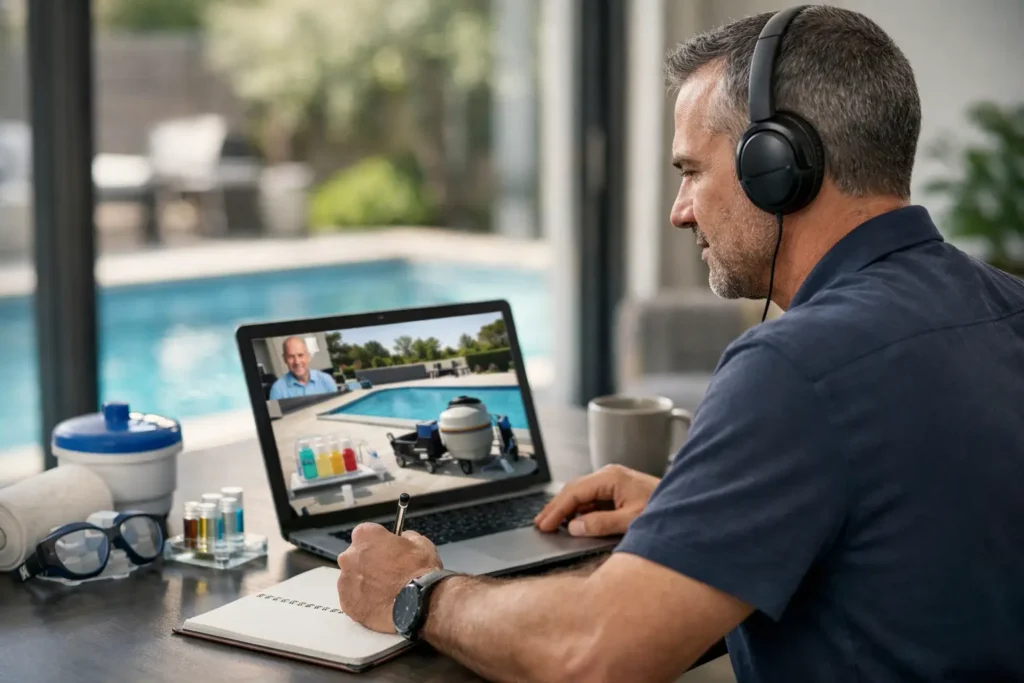
CPO.Training delivers this format through live, instructor-led virtual classes, allowing students nationwide to receive the established CPO curriculum without travel. Students still need to show up prepared, participate, and complete the required course work. Online delivery makes training more accessible; it does not make professional responsibility optional.
Who Should Take the Course?
Two-day CPO training is designed for people responsible for pools and spas where the public, residents, guests, or members swim. That includes apartment and HOA maintenance teams, hotel and resort staff, fitness centers, schools, recreation facilities, municipal properties, and pool service businesses.
It is also a practical choice for supervisors who may not perform daily testing but need to oversee vendors, staff, budgets, closures, and compliance. When a vendor says a pool needs a chemical adjustment, pump repair, or equipment upgrade, basic operator knowledge helps a manager ask better questions and make more informed decisions.
First-time operators should not assume they need years of field experience before enrolling. The course is meant to build foundational understanding. However, students who have not worked with pool equipment or water testing may benefit from early access to preparatory materials. A Headstart program, class handouts, pool code resources, and a pool math workbook can give those students more time to become familiar with the language and calculations before class begins.
How to Prepare for an Online CPO Class
Your preparation affects how much you retain. Set aside both class days, use a reliable internet connection, and choose a quiet location where you can focus. Treat virtual instruction as professional training, not something to watch between work orders and phone calls.
Bring questions from your own facility if you have them. Recent test logs, recurring chemical challenges, equipment photos, or questions about a pool closure can help you connect course concepts to the work you perform. Do not rely on class time to diagnose a specific emergency, but use the opportunity to understand the principles that guide a sound response.
It also helps to review basic math before class. Pool operators regularly work with volume, dosage, concentration, and flow calculations. You do not need to be a mathematician, but you do need to understand how small calculation errors can lead to wasted chemicals, poor water quality, or unsafe conditions.
What Certification Can and Cannot Do
A CPO certification demonstrates that you have completed recognized operator training and passed the required assessment. It can help meet employer and jurisdictional requirements, support professional credibility, and provide a stronger basis for daily decisions. The credential is generally valid for five years, giving operators a meaningful period before recertification is needed.
Still, certification is not a substitute for daily attention. Water conditions can change quickly with weather, bather load, equipment problems, or chemical mistakes. Certified operators must continue testing, documenting, maintaining equipment, and following local health department direction.
The credential also does not mean every facility should be managed exactly the same way. A small apartment pool, a high-use hotel pool, and a commercial spa each have different operating demands. The value of training is learning how to evaluate those differences using sound principles rather than relying on habit or assumptions.
A Faster Way to Build Real Operator Confidence
The best reason to take a two-day online CPO class is not simply to check off a requirement. It is to become more capable when the water test is out of range, a guest reports an issue, the filter pressure climbs, or an inspector asks for records. Those are the moments when practical knowledge protects the people using your facility and the organization responsible for it.
Choose a live course, come prepared to participate, and keep the class materials available after certification. The two days may move quickly, but the decisions you make afterward will affect pool safety and compliance every day.