
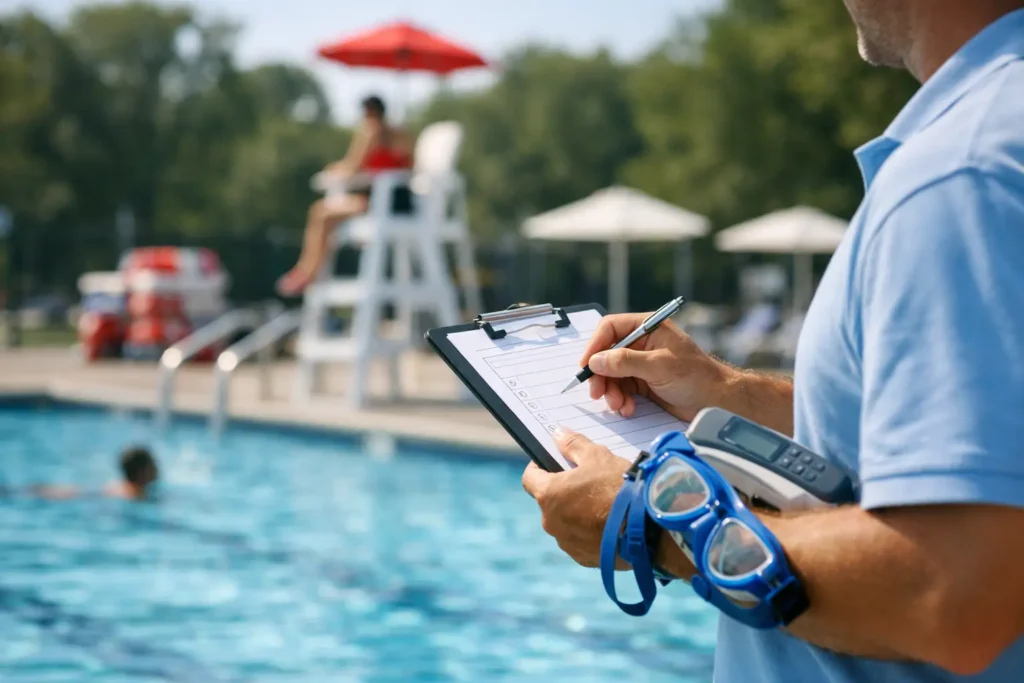
A public pool can look clean, have clear water, and still fail an inspection. A missing drain-cover approval, an unreadable emergency phone sign, or a chemical reading outside the local code range can create a real safety issue and a preventable closure. This public pool inspection checklist helps operators find problems during routine rounds, before a health inspector or a guest finds them first.
The checklist is not a substitute for your state or local health code. Requirements vary by jurisdiction, pool type, bather load, and whether the facility includes a spa, splash pad, diving area, or water feature. Use it as a field-ready framework, then add the specific standards required by your local health department.
Start With a Public Pool Inspection Checklist Routine
The most effective inspections are consistent. A rushed walk-through immediately before opening can catch obvious hazards, but it may miss patterns such as recurring low sanitizer levels, a failing circulation pump, or incomplete chemical logs. Build checks into the operating day: before opening, during periods of heavy use, after severe weather or contamination events, and at closing.
Assign responsibility by name, not by job title alone. The person completing the check should understand what acceptable readings and equipment conditions look like, how to document findings, and when to close the pool or call for service. A checkmark without a corrective action process does not protect swimmers or the facility.
Keep inspection records organized and legible. Inspectors commonly review logs, chemical test records, maintenance documentation, incident reports, safety-equipment checks, and required certifications. Accurate records show that the operator recognized issues and responded appropriately.
Water Quality and Chemical Control
Water chemistry is usually the first operational area to inspect because it changes throughout the day. Test water using a reliable, appropriate test method and compare results with the ranges required by your local code and chemical program. Do not rely on water appearance alone. Clear water can still have inadequate sanitizer, an unsafe pH level, or poor disinfection conditions.
During each check, verify and document:
- Sanitizer residual, such as free chlorine or bromine, is within the required operating range.
- pH is within the facility’s approved range and supports effective sanitization and swimmer comfort.
- Water clarity allows the main drain or other required bottom marker to be clearly visible from the deck.
- Combined chlorine, cyanuric acid, alkalinity, calcium hardness, and other secondary parameters are tested on the schedule required for the pool.
- Chemical feeders, controllers, probes, and test kits are functioning, clean, and within calibration or replacement schedules.
The correct response depends on the condition. A minor pH adjustment may be handled while the pool remains open if code and operating procedures allow it. Loss of sanitizer residual, cloudy water, fecal contamination, vomit, blood, or an inability to see the pool bottom can require immediate closure and a documented remediation process. When there is doubt, protect bathers first and follow the local health department’s closure criteria.
Check Chemical Storage Separately
The chemical room deserves its own inspection, not a quick glance while checking the pump. Confirm that containers are labeled, closed, and stored according to manufacturer instructions. Incompatible products must be segregated. Acids and chlorine products, for example, should never be casually placed together because mixing them can release hazardous gas.
Check ventilation, lighting, access control, eyewash equipment if required, spill-response supplies, safety data sheets, and signs. Look for leaks, corrosion, damaged containers, damp floors, and strong or unusual odors. Chemical handling is an area where a small shortcut can quickly become an emergency.
Circulation, Filtration, and Mechanical Equipment
A pool’s circulation system is the working side of water quality. Inspect pumps, filters, piping, feeders, gauges, valves, heaters, and controllers at the start of the day and whenever operating conditions change. Listen for unusual pump noise, watch for leaks, and compare pressure readings with the facility’s normal operating range.
A rising filter pressure may indicate the need for cleaning or backwashing. Low pressure can point to air in the system, a clogged pump basket, a valve issue, or loss of prime. The exact cause varies, so operators should avoid treating gauge readings as a stand-alone answer. Compare current readings with previous logs and investigate changes before water quality is affected.
Confirm that skimmers are operating, weirs move freely, baskets are cleared as needed, and return inlets provide adequate circulation. Check that drain covers are intact, securely fastened, and appropriate for the installed suction system. Missing, broken, or improperly secured suction outlet covers are serious hazards and require immediate action.
Inspect heaters for proper operation, visible leaks, error codes, and safe ventilation. For spas, verify temperature against the local maximum limit and the facility’s operating policy. High spa temperatures create increased risk for children, older adults, pregnant guests, and people with certain medical conditions. A functioning thermostat is not enough if the displayed temperature is inaccurate, so verify it with a dependable thermometer when needed.
Deck, Barriers, and Guest Safety
A safe body of water does not compensate for an unsafe pool deck. Walk the entire perimeter with the perspective of a guest, child, or person carrying towels and equipment. Look for standing water, cracked concrete, loose handrails, trip hazards, damaged coping, and sharp edges. Address hazards promptly or restrict access until repair is complete.
Inspect fencing, gates, latches, self-closing mechanisms, and required warning signs. Gates should close and latch reliably without being propped open. Verify that required depth markers are visible and accurate, no-diving notices are posted where required, and rules are readable from normal entry points.
Emergency equipment must be accessible, visible, and in serviceable condition. Depending on the code and facility design, that may include a reaching pole, life ring, rescue tube, spine board, first-aid supplies, emergency phone, emergency shutoff, and posted emergency contacts. Do not let chairs, stored furniture, planters, or maintenance equipment block access.
Pay particular attention to pool entry and exit points. Ladders, stairs, handrails, lifts, and grab rails should be secure and free of excessive corrosion or damage. If an accessibility lift is provided, inspect it according to the manufacturer’s instructions and facility policy. A lift that is present but has a dead battery or cannot be operated when needed does not serve the guest or the facility.
Documentation That Holds Up During an Inspection
Health inspections often reveal a documentation problem before they reveal an equipment problem. Operators may be managing the pool well but unable to show test frequency, corrective actions, equipment service, or staff training. Records should tell a clear story: what was checked, when it was checked, who checked it, what was found, and what happened next.
Your operating file should generally include daily chemical logs, maintenance and repair records, incident reports, staff training records, chemical inventory information, inspection reports, and permits or required certifications. Keep a current copy of applicable pool rules and emergency procedures available to staff.
When a reading is out of range, document more than the number. Record the time, the condition, the action taken, retest results, and whether the pool was closed or reopened. For example, writing “added chlorine” is less useful than recording the initial free chlorine reading, the product and amount used, the retest time and result, and the operator’s initials. Specific records help the next shift operate confidently and demonstrate responsible management.
Know When to Stop and Escalate
Operators should never feel pressured to keep a pool open when a condition could harm bathers. Close or restrict the pool when required by code, facility policy, manufacturer instructions, or sound professional judgment. Examples can include inadequate sanitizer, poor clarity, a broken drain cover, an electrical concern, a failed barrier, a contamination event, or missing required emergency equipment.
Escalation should also be defined in advance. Staff need to know who to call for a feeder failure, plumbing leak, heater issue, chemical spill, or suspected recreational water illness. Clear procedures prevent delayed decisions during busy weekends or after-hours shifts.
A Certified Pool/Spa Operator course gives staff the practical foundation to interpret test results, recognize hazards, document corrective actions, and communicate effectively with service providers and inspectors. CPO.Training delivers that instruction live online in two days, helping working operators build field-ready knowledge without travel.
The best inspection habit is simple: look carefully, test accurately, document completely, and act before a minor defect becomes a closure. A well-run public pool is not defined by the day an inspector arrives. It is defined by the routine decisions operators make every day guests trust the water.