A failed inspection, a water-chemistry issue, or a new job requirement rarely arrives at a convenient time. When certification is needed, pool and spa operators need a course that fits a working schedule without cutting corners on the knowledge that protects swimmers, staff, and the facility.
That is the real question behind online versus classroom CPO training. The decision is not simply about where you sit for two days. It is about whether you can learn the approved material, ask informed questions, complete the required course and exam process, and return to your property ready to operate with greater confidence.
Online Versus Classroom CPO Training: The Core Difference
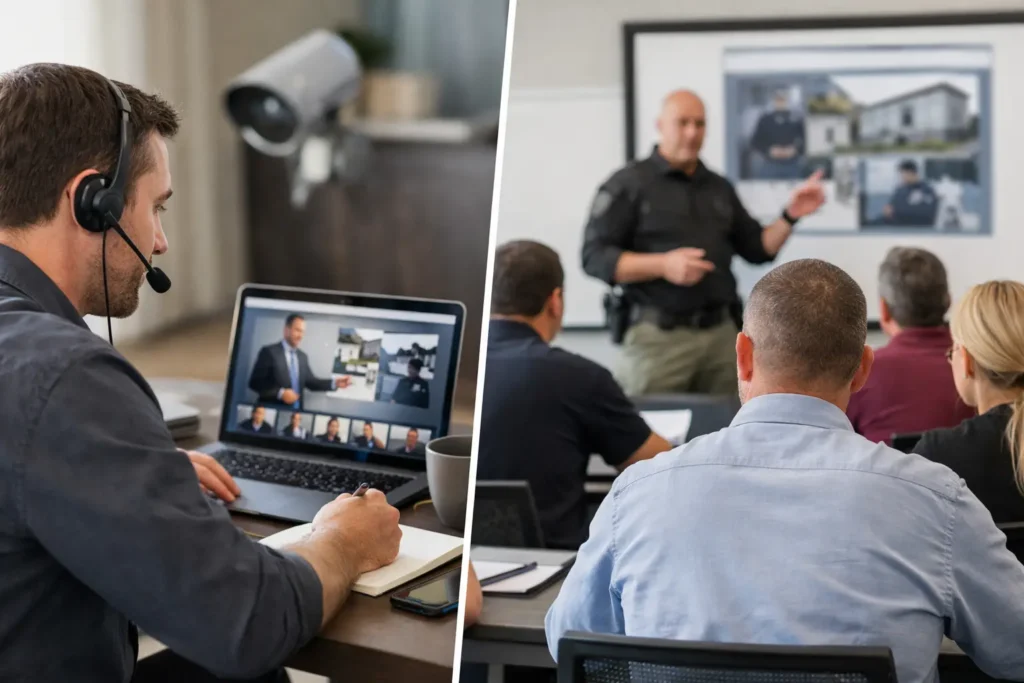
Traditional classroom CPO courses bring students to a scheduled location for instructor-led training. A live online course brings that same instructor-led learning into a virtual classroom, allowing students to participate from home, the office, or another suitable location.
The format changes the logistics. It should not change the seriousness of the training. A quality live virtual CPO course follows the established curriculum, gives students access to a qualified instructor in real time, and allows for questions throughout the course. You are not left alone with pre-recorded videos and expected to sort out complicated chemistry calculations or code-related questions on your own.
For many working operators, the biggest advantage is simple: no travel, no hotel, no time lost commuting to a training site. That can make a meaningful difference for a property manager overseeing multiple communities, a maintenance technician with a full service schedule, or a hotel employee trying to minimize time away from the property.
Classroom training can still be a good fit for students who strongly prefer face-to-face instruction, have limited access to reliable internet, or learn best in a dedicated off-site environment. The right choice depends on how you learn and what your workday allows.
What You Learn Should Matter More Than the Room
CPO certification training covers the operational knowledge behind safe public and commercial pool and spa management. Students need to understand circulation, filtration, disinfection, water balance, testing, safety procedures, maintenance practices, and the records that support compliance.
These are not abstract subjects. An operator may need to determine why chlorine demand has increased, respond to cloudy water, recognize a circulation problem, calculate chemical adjustments, or document readings for a health inspector. A course should connect each topic to decisions made at the pool deck and in the equipment room.
In either format, look for instruction that explains the reason behind a procedure. Knowing that a test must be performed is useful. Understanding what the result means, what conditions may be causing it, and when the pool should be closed is what helps an operator make sound decisions under pressure.
A live instructor is particularly valuable when the subject turns technical. Pool math, water balance, and equipment concepts can become much clearer when students can pause, ask a question, and work through an example with someone who understands field conditions.
Live Online Training Is Not Self-Paced Training
One common point of confusion is the difference between live online CPO training and a self-paced online course. They are not the same experience.
A live virtual classroom has scheduled class sessions and real-time instruction. Students can hear the instructor, participate in discussions, ask questions, and receive clarification as the material is taught. The structure helps keep the class moving through the required content while maintaining accountability.
Self-paced programs may offer flexibility, but that flexibility can also mean delaying the work when other responsibilities intervene. For first-time operators especially, the absence of immediate instructor support can make challenging topics harder to absorb.
CPO.Training uses a live, instructor-led virtual model designed for professionals who need the convenience of online access without giving up direct instruction. That approach is often a practical middle ground: the efficiency of remote attendance with the guidance students expect from a professional course.
Comparing Time, Cost, and Access
For most students, the online versus classroom CPO training decision comes down to more than tuition. The true cost includes time away from work, fuel, parking, lodging when necessary, meals, and the operational disruption created by travel.
A local classroom course may be convenient if it is close to your facility and offered on dates that work. But classroom availability can be limited, particularly for operators in smaller markets or those who need a specific certification timeline. A live online class gives students access to scheduled training without being restricted to the nearest physical course location.
Online training also reduces the chance that travel problems will interfere with attendance. Weather, traffic, vehicle issues, and last-minute coverage changes can turn a simple course day into a scheduling problem. Attending from a quiet, reliable workspace can be the more predictable option.
That said, virtual learning requires preparation. Students should have a dependable internet connection, a computer or device that supports the class platform, course materials available before class begins, and a space where they can focus. Trying to attend between interruptions at a busy front desk or while performing maintenance calls will make any course less effective.
Interaction and Practical Application
Some operators assume an in-person class is automatically more interactive. That depends on the instructor and the course design. A large classroom can leave little room for individual questions, while a well-managed live virtual class can encourage frequent discussion and direct support.
The better question is whether the instructor makes the material usable. Do they explain how to interpret test results? Do they connect safety requirements to daily operations? Do they help students understand common errors, such as adding chemicals without verifying the cause of an imbalance or overlooking circulation issues while chasing a water-quality symptom?
Practical application does not require a pool to be physically present in the classroom. Much of the operator’s work involves judgment, calculations, documentation, and recognizing the relationship between equipment performance and water conditions. Those skills can be taught effectively online when examples are clear and students can engage with the instructor.
For operators who need extra time before class, preparatory support can help. Reviewing handouts, codes, reference materials, and pool math before the course allows students to arrive with a stronger foundation. This is especially useful for new maintenance staff, employees moving into a supervisory role, and professionals returning for recertification after several years.
Compliance Is Local, Even When Training Is Nationally Recognized
CPO certification is widely recognized, but local and state health department requirements can vary. A facility may have its own policies, and an inspector may expect records, operating procedures, and safety practices that go beyond the certificate itself.
Before enrolling, confirm what your jurisdiction requires for the type of pool or spa you operate. This matters for apartment communities, hotels, gyms, schools, recreation centers, and other commercial or public facilities. In California, for example, operators should understand both their certification responsibilities and the local rules that govern their specific site.
The course format does not remove the need to follow local requirements. What good training does provide is a stronger working base for interpreting operational expectations, maintaining safer water, documenting routine checks, and knowing when a condition requires corrective action.
How to Choose the Right Format for Your Team
Choose a live online course when travel would add unnecessary cost or downtime, when you need broader date availability, or when your team values learning from a qualified instructor without leaving the area. It is often the best fit for busy professionals who can set aside two focused days and attend from a reliable location.
Choose a classroom course when a nearby session is available, travel is not a burden, and you personally learn better in a physical group setting. For some students, being away from workplace interruptions is worth the additional logistics.
Whichever format you choose, do not base the decision on convenience alone. Confirm that the course is instructor-led, covers the approved curriculum, provides a clear path through the course and exam requirements, and gives you a chance to ask operational questions. The credential is valuable, but the practical knowledge behind it is what helps you protect your facility every day.
A good CPO course should leave you with more than a certificate. It should leave you better prepared to test accurately, respond calmly, document consistently, and keep your pool or spa operation ready for the people who depend on it.