
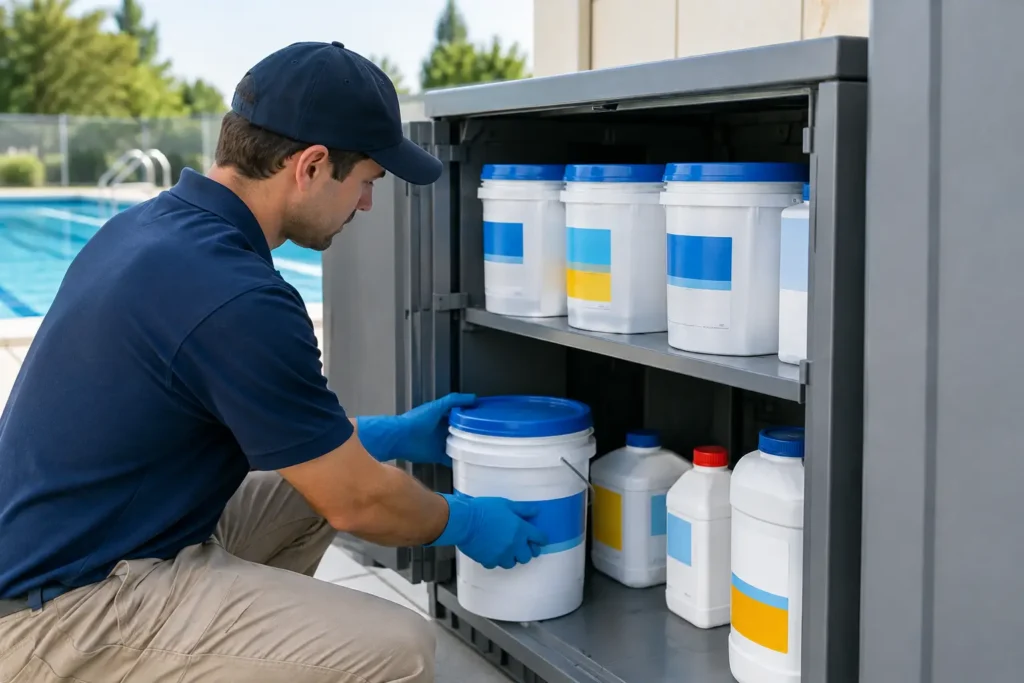
A chemical room can look orderly and still present a serious hazard. A tightly sealed room with acid beside chlorine, damp floor residue beneath calcium hypochlorite, or unlabeled transfer bottles can turn a routine service call into an exposure, fire, or evacuation event. The best pool chemical storage practices protect operators, guests, property, and the facility’s ability to stay open.
For public and commercial pools, chemical storage is not a back-room housekeeping task. It is part of the operator’s safety program and a frequent point of attention during inspections. Your product labels, Safety Data Sheets (SDS), local fire requirements, and health department rules are the final authority. But the operating principles below give staff a reliable framework for making sound decisions every day.
Start With Compatibility, Not Shelf Space
The central rule is simple: never store chemicals based only on what fits on the shelf. Store them based on compatibility.
Pool chemicals are designed to react. That is what makes them useful for disinfection, oxidation, pH control, and water balance. When incompatible products meet outside the pool, however, the reaction may produce heat, fire, toxic gas, pressure, or splashing. A room that is crowded, poorly labeled, or stocked by several different employees creates opportunities for exactly those mistakes.
Keep acids physically separated from chlorine products. Acid contacting sodium hypochlorite or other chlorine compounds can release chlorine gas. Do not assume closed containers eliminate the risk. A leaking cap, damaged container, contaminated scoop, or spill can create contact where it should not occur.
Oxidizers require special attention. Calcium hypochlorite, commonly called cal hypo, is a powerful oxidizer and should be stored dry, cool, and away from combustible materials, organic products, acids, oils, grease, and other incompatible chemicals. Never place it near cardboard, rags, wood, mulch, fertilizers, or solvents simply because those items are stored in the same maintenance area.
Different sanitizers may have different restrictions. Stabilized chlorine products, bromine products, non-chlorine shock, and specialty chemicals should remain in their original packaging and be separated according to their labels and SDS instructions. If your facility uses more than one sanitizer system, create clearly defined storage zones rather than relying on staff memory.
Liquid Chemicals Need Their Own Controls
Liquid chlorine and muriatic acid are often delivered and stored in larger containers, which makes their placement especially consequential. Store them in separate, designated areas with secondary containment where required. Avoid placing either product above another chemical, over drains, or where a leak could flow into an incompatible product.
Acid fumes can corrode nearby metals, equipment, electrical components, and shelving. Liquid chlorine can degrade in heat and sunlight while building pressure in its container. The right storage area accounts for both the products’ chemical compatibility and their physical behavior over time.
Build a Storage Area That Supports Safe Work
A good chemical room makes the safe action the easy action. It should be secure from unauthorized access, protected from weather, and kept clean enough that leaks and residue are obvious. Chemical storage should not double as a general supply closet, break area, or equipment dumping ground.
Use shelving made of compatible, corrosion-resistant material and keep containers off the floor when the product label allows it. Arrange heavy containers low, with labels facing outward. Do not stack products unless the manufacturer specifically permits it. Overstacking can damage containers, hide leaks, and make it harder to retrieve products without dropping or puncturing them.
Ventilation matters, but it is not a substitute for separation. Chemical vapors must be managed according to the facility’s design, applicable codes, and product instructions. Never use a storage room as a place to “air out” open containers. Keep containers closed when not in use, and report persistent odors, corrosion, or visible vapor concerns promptly.
Temperature and moisture control also matter. Direct sun, excessive heat, and wet floors shorten product life and raise the chance of dangerous reactions. Cal hypo and other dry oxidizers must be protected from water. A leaking roof, condensation line, washdown hose, or nearby mop sink can create a serious problem. Correct the source of moisture instead of repeatedly moving wet containers around the room.
The room should have clear access, adequate lighting, and the emergency equipment required for your site. Depending on the chemicals and local requirements, this may include spill-control materials, eyewash access, emergency communication, signage, and appropriate fire protection. Staff should know where these resources are before an incident occurs.
Keep Every Product Identified and Traceable
The original manufacturer container is the safest place for a pool chemical. It provides the product identity, hazard warnings, directions, and lot information that operators need. Never store chemicals in food or beverage containers. Never reuse an empty chemical container for another product.
If a product must be transferred to a smaller approved container for immediate operational use, label it according to workplace hazard communication requirements. At a minimum, the container must clearly identify what it contains and communicate the relevant hazards. An unlabeled bottle is not a minor paperwork issue. It can lead to the wrong chemical being added to the water, combined during cleaning, or handled without proper protective equipment.
Maintain an organized inventory. Date containers when they arrive, rotate stock so older material is used first when appropriate, and avoid buying more product than the facility can safely store before it degrades. This is particularly useful with liquid chlorine, which loses strength over time and in heat. Overstocking may feel economical, but it can increase storage risk and make chemical dosing less predictable.
Remove damaged, swollen, leaking, unknown, or expired products from normal storage procedures. Do not guess how to dispose of them or combine leftovers to “use them up.” Follow the manufacturer’s instructions and local hazardous-waste requirements. When there is uncertainty, stop and obtain qualified guidance.
Prevent Contamination During Daily Use
Many chemical incidents begin with a shortcut. A wet scoop used in a dry chemical container, a scoop shared between products, a lid placed on the wrong bucket, or a small amount of residue left on a work surface can contaminate an otherwise sound storage system.
Assign dedicated, clean, dry scoops to each dry chemical and store each scoop with its designated product. Never return unused material to the original container. Never mix dry chemicals together before adding them to water, and never add water to a dry chemical unless the label specifically directs that method. The order of addition and dilution instructions on the label are part of the safety procedure, not optional details.
Keep the chemical room clean using methods appropriate for the products stored there. Sweeping spilled oxidizer dust into a general trash container, for example, can be dangerous. Use the product’s SDS and your facility’s spill procedure. Staff should understand when a spill is within their training and equipment level and when the area must be isolated and escalated to emergency responders or a qualified cleanup resource.
Train for the Decisions Operators Actually Make
Written procedures help, but operators need practical judgment. They should be able to recognize incompatible storage, read an SDS, select required personal protective equipment, respond to a leaking container, and explain why a chemical cannot be placed in a convenient but unsafe location.
Training is especially important when facilities have seasonal staff, multiple shifts, vendor deliveries, or shared maintenance spaces. A designated chemical-storage map can reduce confusion by showing where each product belongs, which products must remain separated, and what items are prohibited from the room. Review it whenever inventory changes or a new chemical is introduced.
A trained operator also knows when not to proceed. If a container is bulging, hot, smoking, leaking, or releasing strong fumes, do not try to solve the issue by moving it through occupied areas. Isolate the area if it can be done safely, follow the emergency plan, and contact the appropriate authority. Protecting people comes before saving product.
For operators building this knowledge into their daily work, live CPO training helps connect chemical theory to the situations found in pump rooms, equipment areas, and commercial pool facilities. Certification is not just about passing an exam. It builds the operational confidence to recognize hazards before they become emergencies.
Make Inspections Part of the Routine
Chemical storage should be checked on a schedule, not only before a health inspection or after a problem. A brief weekly review can catch missing labels, broken shelving, moisture intrusion, incompatible deliveries, expired stock, and blocked access before they create a larger issue.
Document what you find and correct. If the same issue returns, treat it as a process problem rather than an individual mistake. The solution may be clearer signage, better inventory limits, a new shelving layout, or retraining for the team that receives deliveries.
The safest chemical room is not necessarily the largest or most expensive one. It is the one where every container has a defined place, every employee understands the rules, and unsafe conditions are addressed before someone has to react to them.