
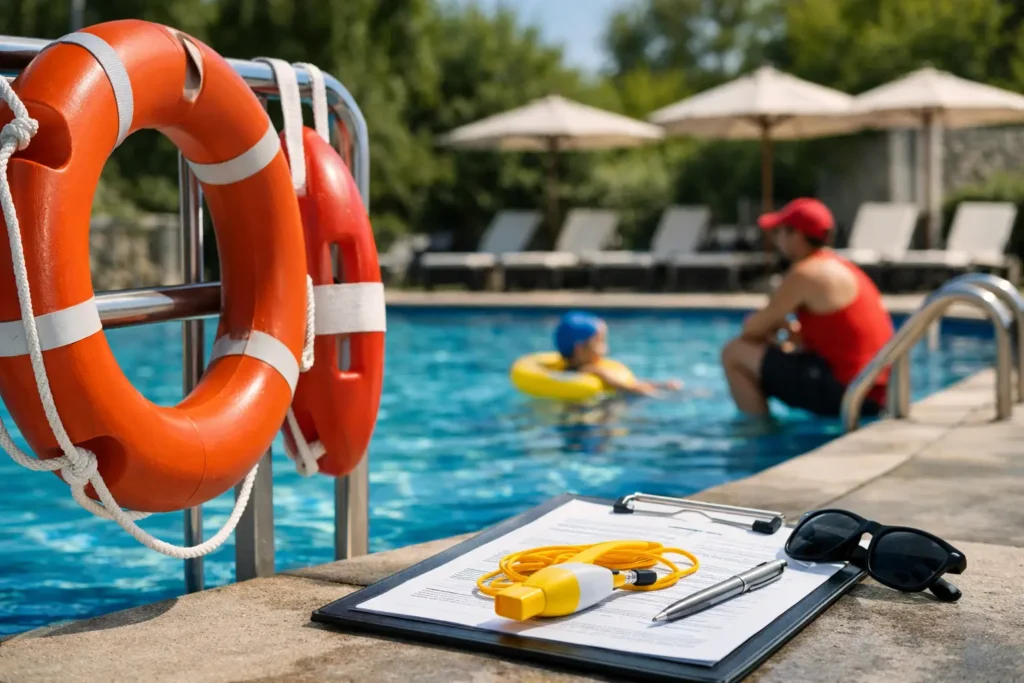
A pool gate that does not latch, a missing drain cover, or a chemical room left unsecured can turn a routine property issue into a serious resident-safety event. HOA pool safety regulations exist to prevent those failures, but there is no single national checklist that every association can copy and call complete. Boards and operators must understand which rules apply to their facility, then build dependable daily practices around them.
For HOA boards, property managers, and maintenance teams, the objective is straightforward: keep the pool safe, sanitary, open when it should be open, and closed when conditions create a risk. That requires more than posting rules on a fence. It requires an operator who understands water quality, equipment, documentation, emergency response, and the authority of local health officials.
Which HOA Pool Safety Regulations Apply?
Most HOA pools are regulated at the state or local level as public, semi-public, or commercial aquatic facilities. The exact classification matters. A pool used only by residents and their guests may be regulated differently than a hotel pool or a municipal facility, but it can still be subject to health department inspections, operating permits, barrier requirements, and equipment standards.
Start with the agency that issues or oversees the pool operating permit. Depending on the jurisdiction, that may be a county environmental health department, city health department, or state agency. Its code is usually the primary source for water chemistry limits, testing frequency, recordkeeping, safety equipment, signage, and closure requirements.
Other rules may come from building, electrical, plumbing, fire, and accessibility authorities. Federal requirements can also apply. For example, the Virginia Graeme Baker Pool and Spa Safety Act establishes drain-cover and anti-entrapment requirements for public pools and spas. California associations should also pay close attention to state pool-safety provisions and local county enforcement practices, which can add requirements beyond a general state standard.
The association’s own rules do not replace code. A board may set reasonable resident conduct rules, such as no glass containers or adult supervision for young children, but it cannot waive a required barrier, inspection, drain cover, or chemical-control practice.
The Safety Basics Inspectors Expect to See
A compliant pool is the result of many small controls working together. The fence, gate, circulation system, disinfectant level, records, and emergency equipment all matter because a failure in one area can affect the rest.
Barriers, gates, and controlled access
Pool barriers are designed to keep unsupervised children from reaching the water. Local codes commonly address minimum fence height, gaps beneath the fence, climbable features, gate swing direction, self-closing hinges, and self-latching hardware. A gate that was compliant when installed can become noncompliant after years of settling, worn hinges, landscaping changes, or makeshift repairs.
Inspect gates routinely, not only before a health inspection. Confirm that each gate closes and latches from a fully open position, that latches are not easily reachable by small children, and that no furniture, planters, or stored equipment create a climbable path over the barrier. Access-control systems, including key fobs and magnetic locks, should support the physical barrier rather than substitute for a properly functioning one.
Water quality and circulation
Clear water is not automatically safe water. Operators must test and record disinfectant residual, pH, and other parameters required by their health authority. Frequency varies by code and bather load. Some facilities need more frequent testing during busy periods, high temperatures, storms, equipment problems, or contamination events.
A qualified operator also needs to recognize what the numbers mean. Low disinfectant can allow pathogens to spread. High disinfectant, improper pH, poor circulation, or an unbalanced chemical condition can cause irritation, corrosion, scaling, and equipment damage. If required readings are outside the permitted range, the correct response may be adjustment and retesting – or immediate closure until the condition is corrected.
Drain and suction-entrapment protection
Suction outlets deserve special attention because entrapment incidents can be catastrophic. Drain covers must be present, correctly matched to the sump, securely fastened, and within their marked service life. A cracked, loose, missing, or expired cover is not a minor maintenance item.
The pool’s suction-entrapment protection may involve compliant covers, multiple drains, safety vacuum-release systems, gravity drainage, or another approved configuration. The right solution depends on the pool design and applicable code. Do not assume that replacing a visible cover resolves every compliance question. When equipment is altered or a cover fails, involve a qualified pool professional and confirm the required correction with the local authority.
Safety equipment, signs, and emergency readiness
Required safety equipment varies by jurisdiction, but commonly includes a reaching pole, rescue equipment, a first-aid kit, emergency phone access, and visible warning signs. Signs may address pool rules, emergency contact information, depth markings, no-diving areas, occupancy limits, and warnings about alcohol, children, or health risks.
The equipment must be accessible and usable. A rescue hook locked in a storage room, a faded depth marker, or an emergency phone with no service does not help during an incident. Staff should know where equipment is located, who calls emergency services, who directs responders to the pool, and who secures the area afterward.
Documentation Is Part of Pool Safety
When a health inspector arrives after a complaint or incident, verbal assurances carry little weight. Daily operational records show whether the association had a functioning safety process.
At a minimum, maintain logs required by the local health department and keep them organized at the facility or readily available to management. Entries often include chemical test results, water temperature, operating hours, equipment readings, corrective actions, and closures. Record what happened, when it happened, who handled it, and when normal operation resumed.
This recordkeeping also protects the association operationally. If a pump loses prime overnight or chlorine drops after a heavy rain, a documented response helps the board identify patterns, support maintenance decisions, and demonstrate that staff acted responsibly. Logs should be completed at the time of testing, not reconstructed days later.
Assign Clear Responsibility Before Something Goes Wrong
An HOA board should not rely on a vague assumption that “maintenance handles the pool.” Assign responsibilities in writing. The board sets policy and provides resources. The property manager coordinates vendors, records, and follow-up. The designated operator performs or oversees required testing, inspections, adjustments, and closures. Pool-service vendors should have a clear scope of work, but the association still needs to verify that required duties are being completed.
A practical operating plan should answer a few basic questions: Who has authority to close the pool? Who is contacted for a failed pump or unsafe chemical reading? Who checks gates on weekends? Where are inspection reports, permits, safety data sheets, and emergency contacts kept? If no one can answer these questions quickly, the facility is not as prepared as it should be.
Certification strengthens this structure. Many jurisdictions require a Certified Pool/Spa Operator or similarly qualified person, while others do not specifically mandate the credential. Even where it is not required, CPO training gives the designated operator a working understanding of water chemistry, circulation, disinfection, safety procedures, and code-driven operations. CPO.Training provides live, instructor-led training that helps HOA personnel apply those concepts without taking time away for travel.
When the Right Decision Is to Close the Pool
Keeping amenities available matters to residents, but an open pool is never worth an avoidable safety risk. Operators should close the facility when required chemistry cannot be maintained, circulation or filtration is not functioning as required, an entrapment hazard is present, the barrier is compromised, visibility is inadequate, or another condition violates the operating permit or creates immediate danger.
Fecal incidents, vomit, blood, severe weather, broken glass, and contaminated water each call for a response based on local code and accepted pool-operator procedures. Do not treat every contamination event the same. The disinfectant concentration, contact time, filtration, cleanup process, and documentation may differ depending on the event.
A temporary closure can frustrate residents. A poorly handled safety event can expose residents to harm and leave the association facing far greater consequences. Clear notice, prompt vendor coordination, and accurate reopening criteria make closures easier to manage.
A Better Compliance Routine for HOA Pools
The most effective approach is not to wait for an annual inspection. Create a repeatable routine that includes daily water testing and visual checks, regular gate and safety-equipment inspections, scheduled preventive maintenance, and periodic review of local code updates. Before peak season, inspect drain covers, confirm permit status, review emergency procedures, refresh signs, and verify that the designated operator has current training.
Because local rules change and enforcement priorities vary, boards should confirm requirements directly with their permitting authority rather than relying on another community’s checklist. A well-run HOA pool is not simply a desirable amenity. It is a managed aquatic facility where consistent operator knowledge and disciplined daily attention protect every person who enters the gate.