
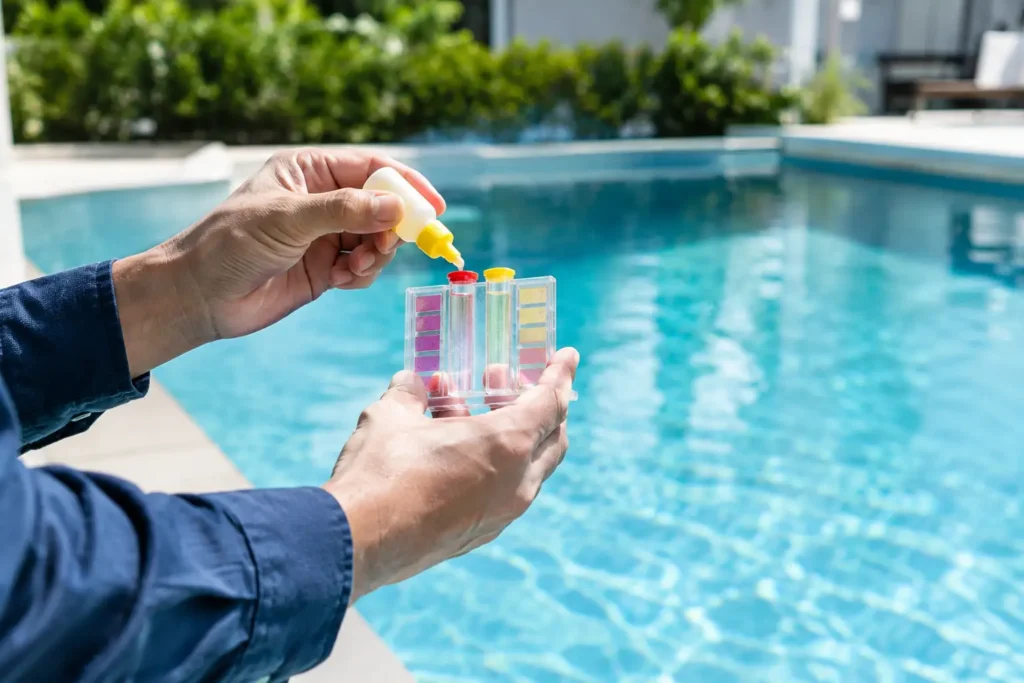
A pool can look perfectly clear and still be unsafe for bathers. Water clarity tells an operator very little about whether enough active sanitizer is available to control germs. Learning to verify pool disinfectant residuals is therefore a daily operating skill, not a task to save for an inspection or a complaint.
For public and commercial pools and spas, the goal is simple: maintain the required disinfectant concentration, test it with a dependable method, record the result, and respond promptly when readings fall outside the required range. The details matter because disinfectant demand can change quickly with bather load, sunlight, temperature, contamination events, and equipment performance.
What a Disinfectant Residual Tells You
A disinfectant residual is the measurable amount of sanitizer remaining in the water after it has reacted with contaminants. With chlorine systems, operators generally track free chlorine, total chlorine, and combined chlorine. Free chlorine is the portion available to disinfect. Total chlorine includes both free chlorine and chlorine that has already combined with nitrogen-containing contaminants. Combined chlorine is found by subtracting free chlorine from total chlorine.
A measurable free chlorine residual does not guarantee perfect water quality, but it is one of the clearest signs that the pool has active sanitizer available. A low or absent residual can leave bathers exposed, especially when the water is heavily used. A residual that is too high can create a different operational problem, including closures, user discomfort, and noncompliance with local code.
Bromine-operated pools are assessed differently, but the same principle applies. The operator must confirm that the active disinfectant level stays within the range required by the local health authority and the facility’s operating plan.
Use a Test Method You Can Trust
For routine commercial-pool testing, a DPD color-comparison test kit or a photometer is typically the practical choice. DPD testing is designed to distinguish free chlorine from total chlorine, allowing the operator to calculate combined chlorine. Test strips can be useful for a fast field check, but their color blocks are harder to read precisely and they are not always accepted as the primary compliance method.
A good testing process starts before the water sample reaches the comparator. Collect the sample away from return inlets, skimmers, chemical feeders, and dead spots. Reach into the water to elbow depth when conditions allow, then fill a clean sample cell. Test promptly. A sample that sits in the sun, warms up, or is contaminated by residue in the cell can produce misleading results.
Follow the test kit instructions exactly. Using too much or too little reagent, mixing inadequately, reading the color late, or using expired tablets can shift the result. Keep reagents capped, dry, and out of direct sunlight. Replace them according to the manufacturer’s guidance, even if tablets or liquids appear usable.
Photometers reduce some subjectivity because they provide a digital result. They still require clean vials, proper zeroing, fresh reagents, and careful handling. A digital number is only as reliable as the test procedure behind it.
Check free and total chlorine separately
A common field error is treating total chlorine as though it were the available disinfectant residual. It is not. If total chlorine reads 4.0 ppm and free chlorine reads 2.0 ppm, combined chlorine is 2.0 ppm. That result indicates a meaningful buildup of combined chlorine, even though the total number may initially appear adequate.
Elevated combined chlorine can be associated with chloramine odor and bather irritation. It also signals that contaminants are consuming chlorine. The correct response depends on the facility, the sanitizer program, local requirements, and the cause of the buildup. Do not assume that adding a small amount of chlorine will solve every combined-chlorine problem.
When to Verify Pool Disinfectant Residuals
Test frequency should meet or exceed the health department requirement that applies to your facility. Many public and commercial pools require testing at least several times a day, while spas, heavily used facilities, and pools with automated chemical controllers may require more frequent verification. An automated controller does not replace manual checks unless local regulations specifically allow that approach.
The most useful testing schedule follows the actual risk points of the day. Test before opening so the pool starts within the required operating range. Test during periods of high bather load, after a large group uses the water, and after conditions that may increase demand, such as heavy rain, hot weather, or a chemical-feed interruption. Test again before closing if required by your operating procedures or jurisdiction.
Spas deserve closer attention. Their warm water, smaller volume, and concentrated bather load can consume disinfectant rapidly. A result that was acceptable an hour ago may not remain acceptable after a busy period.
If your facility uses an automated chemical controller, compare its displayed reading with a manual DPD or photometer test on a regular schedule. A controller probe can foul, drift, lose calibration, or respond slowly to changing conditions. The manual test is the operator’s verification that the control system reflects the actual water.
Interpret the Reading in Context
Disinfectant residuals cannot be evaluated in isolation. pH affects chlorine effectiveness and test interpretation. Cyanuric acid affects the behavior of chlorine in outdoor pools. Water temperature, bather load, circulation, and filtration all influence how quickly sanitizer is consumed or distributed.
For example, a pool may show an acceptable free chlorine reading but still struggle with water quality after a crowded event. The operator should review pH, circulation time, filter condition, chemical-feed operation, and whether the sample location reflects the overall pool. A single test result is a decision point, not a substitute for observing the complete system.
Avoid relying on smell as a sanitizer test. A strong “chlorine” odor often points to combined chlorine or accumulated contaminants, not an abundance of free chlorine. Likewise, clear water is not proof that disinfection is adequate.
Respond Correctly to Out-of-Range Results
When the disinfectant residual is below the required minimum, take action immediately according to your facility’s procedures and local code. This may mean restricting use or closing the pool until the residual has been restored and verified. Check chemical supply, feeder settings, pump operation, controller alarms, injection points, and recent bather activity before assuming the cause.
When the level is too high, do not allow swimmers to enter until the water returns to the permitted range. The appropriate correction may involve stopping or reducing chemical feed, allowing the level to decrease under controlled conditions, or following an approved corrective procedure. Never make a chemical adjustment based on guesswork.
If results seem inconsistent, repeat the test with a clean cell and fresh reagents. If the second result still does not make sense, test with another approved kit or photometer. Investigate the equipment and water conditions before recording an assumed value.
Document Results Like an Operator
A complete pool log supports compliance, protects the facility, and helps identify trends before they become closures. Record the date and time, free and total disinfectant readings when applicable, pH, tester initials, and any chemical or operational adjustment made. If the pool was closed, document the reason, corrective action, retest result, and reopening time.
Good records reveal patterns that memory misses. Repeated low residuals at the same time each afternoon may point to undersized feed capacity, intense sunlight, a controller issue, or predictable bather demand. Repeated combined-chlorine readings may indicate a need to review circulation, treatment practices, or facility hygiene policies.
Keep the log legible and available for staff and inspectors. More than paperwork, it is a working record that allows the next operator to understand what happened in the water and what action was taken.
Build the Habit Before It Becomes an Emergency
Reliable disinfectant verification comes from a repeatable routine: use the right kit, collect a representative sample, follow the reagent procedure, compare the result to the applicable requirement, and document the action. Those steps take only a few minutes, yet they support the health of every person who enters the water.
CPO certification training helps operators connect these readings to the systems behind them – circulation, chemical feed, filtration, bather load, and code compliance. The strongest operators do not wait for cloudy water or an inspection to start asking questions. They verify the residual, understand what the number means, and act while the problem is still manageable.