
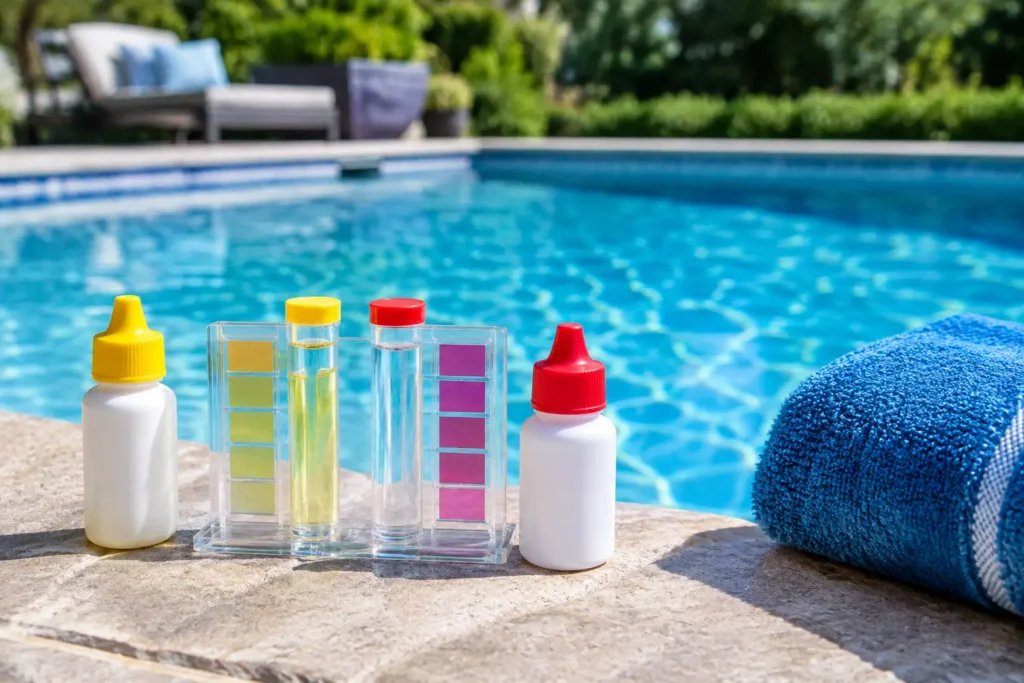
A pool can show an acceptable pH reading at opening and still be headed for a chemistry problem by afternoon. That is why pool alkalinity control matters in commercial and public facilities. Total alkalinity is the water’s pH buffer. When it is in an appropriate range, the operator can maintain sanitizer performance, protect surfaces and equipment, and avoid chasing pH from one test to the next.
For a hotel, apartment community, fitness center, or municipal facility, stable water chemistry is not just a matter of appearance. It affects bather comfort, corrosion risk, scaling, chemical consumption, and the facility’s ability to meet applicable health department requirements. The right target is not always a single textbook number. It depends on the sanitizer program, source water, pool finish, equipment, and local code.
What Total Alkalinity Actually Does
Total alkalinity, often written as TA, measures the water’s ability to resist changes in pH. In most pools, bicarbonate is the primary contributor. Think of alkalinity as a shock absorber: it does not set the pH, but it helps keep pH from moving sharply when chemicals, rain, swimmers, or fresh water are introduced.
This distinction matters in the field. pH tells an operator how acidic or basic the water is at the moment of testing. Alkalinity tells the operator how likely that pH is to move. A pool with low alkalinity may test within the pH range now, then drop after an acid addition or shift rapidly with normal operating conditions. A pool with excessive alkalinity may hold pH too stubbornly and create a recurring tendency toward high pH and scale formation.
For many traditionally chlorinated pools, a total alkalinity range around 80 to 120 ppm is commonly used as a starting point. However, that is not a substitute for product labeling, manufacturer guidance, facility procedures, or local health code. Pools using certain sanitizer systems, including some salt chlorine generators, may operate best at a different target. Spas also require closer attention because high water temperature accelerates chemical changes and increases scaling potential.
Why Pool Alkalinity Control Protects Operations
Poor alkalinity management usually shows up as an operational pattern rather than one dramatic event. Low TA can make pH difficult to hold, increasing the chance of corrosive conditions. Operators may see etched plaster, deteriorating grout, metal staining, corrosion around heaters or fittings, and greater discomfort for swimmers. Water may also become more aggressive toward equipment over time.
High TA creates a different set of problems. pH can rise persistently, especially in pools with aeration, water features, spas, or salt chlorine generation. As pH rises, calcium carbonate scale becomes more likely. Scale can form on tile lines, heaters, filters, cell plates, and circulation components. It can reduce heat-transfer efficiency and turn routine maintenance into expensive repair work.
Alkalinity also affects sanitizer management. Chlorine is generally more effective at lower pH values within the approved operating range. When high alkalinity repeatedly pushes pH upward, operators may find themselves using more acid, spending more time making corrections, and struggling to keep readings consistent. The answer is not to force pH down aggressively without a plan. The answer is to understand the relationship among TA, pH, calcium hardness, temperature, cyanuric acid, and the pool’s overall saturation balance.
Test Before You Treat
A reliable test result is the starting point for every adjustment. Test total alkalinity with a properly maintained drop-count test kit or a calibrated photometric system, following the manufacturer’s instructions exactly. Test strips can be useful for a fast screening, but commercial operators should rely on methods that provide the resolution needed to make chemical decisions.
Take the sample from a representative area of the pool, away from return inlets and chemical feed points. For larger facilities, test more than one location if water circulation is questionable. Record the result along with pH, sanitizer residual, water temperature, calcium hardness, and cyanuric acid where applicable. A single TA number without the rest of the water-balance picture can lead to the wrong correction.
Before adding any chemical, verify pool volume. Many dosing errors begin with an estimated volume that was never confirmed. Use the actual pool dimensions, account for variable depths and attached features, and check the product label for its stated treatment rate. Never assume two products with similar names require the same dose.
Raising Low Alkalinity
Sodium bicarbonate is commonly used to raise total alkalinity. It increases TA with a comparatively modest effect on pH when applied correctly. This makes it a practical choice when alkalinity is low but pH is already near the upper end of the acceptable operating range.
Calculate the required dose based on the measured TA, the desired target, pool volume, and the specific product instructions. In a commercial setting, it is usually wiser to make a partial adjustment, circulate thoroughly, and retest than to add the entire calculated amount at once. This is especially true when the pool is far out of balance or when water volume is uncertain.
Broadcast dry chemical across the pool surface only when the product label and facility procedure allow it. Avoid dumping material in one spot, placing it directly into a skimmer unless specifically approved, or mixing different chemicals together. Keep circulation running, follow required personal protective equipment practices, and document the treatment. If the pH also needs to rise, sodium carbonate may be considered, but it raises pH more significantly and should not be substituted automatically for sodium bicarbonate.
Lowering High Alkalinity Without Creating a Bigger Problem
Lowering TA generally requires acid, but the process needs patience. Muriatic acid or dry acid may be used according to the product label and facility’s chemical-handling procedures. Acid lowers both pH and total alkalinity. If a large correction is needed, a single oversized acid addition can drive pH too low, create corrosive water, and introduce an immediate safety concern.
A controlled approach is safer: calculate a conservative dose, add the chemical correctly with circulation operating, allow the water to mix, and retest before proceeding. Acid must always be added to water, never water to acid. Store and handle it separately from chlorine products, and never combine chemicals in a container, feeder, or mixing vessel.
In some situations, operators lower TA through repeated acid additions followed by controlled aeration to bring pH back up without raising alkalinity. This method can be effective, but it is not a shortcut for every facility. Aeration may be impractical, may affect guest operations, and can cause pH to rise quickly in pools already prone to carbon dioxide loss. Follow your facility procedures and use a complete water-balance assessment rather than treating TA in isolation.
Common Mistakes That Lead to Unstable Water
The most frequent alkalinity mistake is reacting to pH alone. Adding acid every time pH climbs, without checking TA and the cause of the rise, can produce a cycle of overcorrection. Another common issue is treating water immediately after heavy bather use, rain, fresh-water makeup, or a chemical feed problem without first allowing adequate circulation and confirming the readings.
Operators also need to account for source water. A facility that regularly adds high-alkalinity fill water will see TA creep upward over time. Conversely, acidic source water or repeated acid use may gradually lower it. Maintaining a simple chemistry log reveals these trends early. It helps operators adjust feed practices, schedule testing intelligently, and explain corrective actions during inspections.
Do not overlook equipment. A malfunctioning chemical controller, improperly calibrated probe, leaking feeder, failed circulation component, or excessive aeration can make chemistry corrections seem ineffective. If pH or alkalinity refuses to behave as expected, inspect the system before continuing to add chemicals.
Build Alkalinity Checks Into Your Routine
The proper testing frequency depends on bather load, facility type, water features, sanitizer system, and local requirements. A busy commercial pool or spa may need frequent pH and sanitizer checks throughout the day, while total alkalinity may be checked on a scheduled basis and whenever pH becomes difficult to manage. After significant rain, a large water replacement, algae treatment, or major chemical adjustment, retest sooner.
Good pool alkalinity control is less about making dramatic corrections and more about recognizing a trend before it becomes a closure, complaint, or equipment issue. CPO.Training prepares operators to connect water-test results with real operating decisions, so chemical adjustments support safety, compliance, and reliable daily service.
Keep your chemistry log useful, not merely complete. When the numbers begin to drift, the record should help you identify why – and make the next correction with confidence rather than guesswork.