
A fecal incident can turn a normal operating day into an immediate health and compliance issue. Knowing how to respond to fecal incidents quickly protects swimmers, gives staff clear direction, and helps your facility meet the expectations of its health department. The right response is not simply removing visible material and reopening the water. It requires closure, controlled cleanup, disinfection, verification, and documentation.
For commercial pool and spa operators, this is one of the situations where preparation matters most. A written response plan, properly stored PPE, reliable test equipment, and staff training can prevent a stressful event from becoming a preventable exposure or code violation.
Respond to Fecal Incidents: Start With Closure
As soon as an incident is identified, clear swimmers from the affected pool or spa. Do not allow anyone back into the water until the appropriate disinfection process has been completed. Keep the facility calm and professional: staff can simply explain that the water is temporarily closed for a health-related cleaning procedure.
The next steps depend on what was observed. Public-health guidance generally separates incidents into two categories: a formed stool incident and a diarrheal incident. The distinction matters because diarrhea presents a substantially higher risk of Cryptosporidium contamination. Crypto has a tough outer shell and can survive normal chlorine levels for days.
If the material is formed, the risk is generally lower, but the water still requires a documented response. If diarrhea is suspected or cannot be ruled out, treat the event as diarrheal. When information is unclear, choosing the more protective response is usually the safer operational decision.
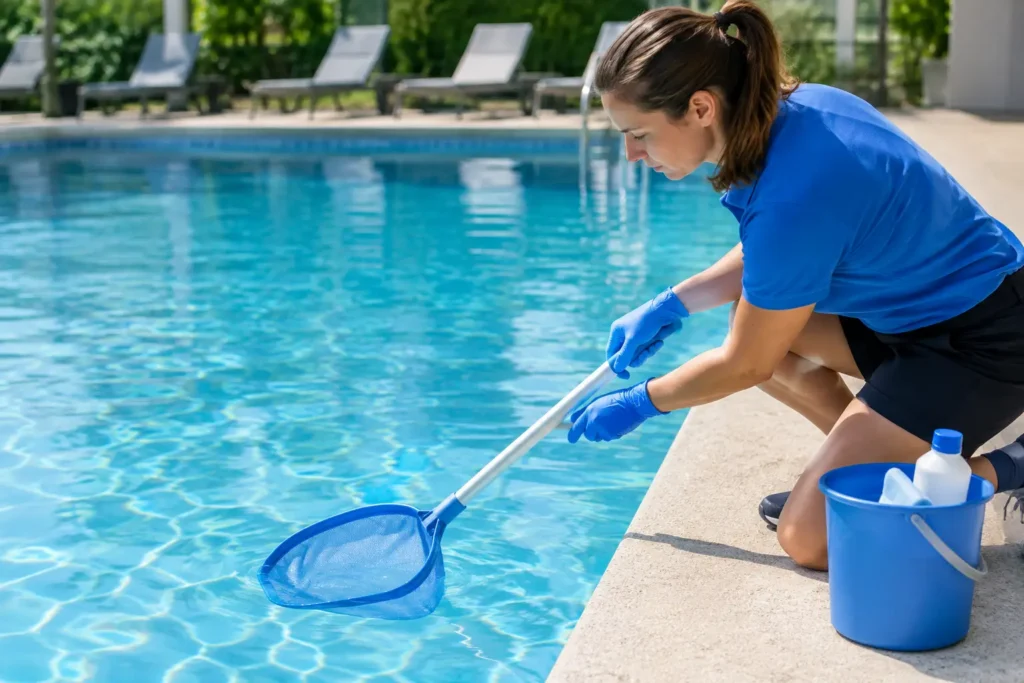
Before handling anything, put on appropriate personal protective equipment. At minimum, this commonly includes disposable gloves. Staff should avoid creating splashes, and they should never use a vacuum system that could contaminate equipment or aerosolize material. Remove solid material carefully with a dedicated net, scoop, or other tool that can be cleaned and disinfected afterward.
Do not use the same equipment for routine skimming until it has been properly disinfected. Dispose of recovered material in a sanitary manner according to your facility policy and local requirements. Staff should wash hands thoroughly after removing gloves.
Disinfect According to the Type of Incident
Removing visible contamination is only the first part of the process. The primary control measure is maintaining a specific free chlorine concentration for a specific contact time while keeping water chemistry within the required range.
For a formed stool incident, common CDC guidance calls for raising free chlorine to 2.0 ppm, maintaining the pH at 7.5 or lower, and holding that chlorine level for at least 25 minutes. The circulation system should operate during this period so treated water moves throughout the vessel.
For a diarrheal incident, the response is more demanding. Common CDC guidance calls for 20 ppm free chlorine at a pH of 7.5 or lower for 12.75 hours, or 765 minutes. This is the hyperchlorination process intended to inactivate Cryptosporidium.
Several details can affect whether that process is successful:
- Cyanuric acid should be 15 ppm or lower during hyperchlorination because stabilizer slows chlorine’s disinfecting action.
- Water temperature should be at least 77 degrees Fahrenheit for the listed Crypto inactivation time to apply.
- Free chlorine must be measured and maintained throughout the entire contact period, not simply adjusted once at the beginning.
- The pool must remain closed until the required concentration and contact time have been achieved and water conditions are safe for reopening.
If your pool has elevated cyanuric acid, reaching the required disinfection conditions may require partial draining and refilling before hyperchlorination. This is one reason routine chemistry management matters. High stabilizer levels can complicate an already time-sensitive response.
Always follow your state or local health department rules if they are more restrictive than general guidance. California operators, for example, should also confirm the requirements of the local environmental health agency with jurisdiction over their facility. Your written fecal incident response plan should identify who has authority to close the vessel, who adjusts chemistry, and when management or the health department must be notified.
Verify Chemistry, Equipment, and Circulation
A successful fecal response depends on measurement, not assumptions. Use a test method capable of accurately reading the chlorine levels required for the situation. Standard comparator kits may not be adequate for high-range chlorine testing, so facilities that operate public pools should have the proper testing supplies available before an event occurs.
Test and record free chlorine and pH before treatment begins. During a diarrheal response, test often enough to prove that the required free chlorine residual was maintained for the full contact time. If the level drops below the target, the required contact time may need to restart. That can significantly extend a closure, especially overnight.
Keep the circulation pump and filtration system operating unless a qualified professional or local regulator directs otherwise. Good circulation helps distribute disinfectant, but operators should remember that circulation does not replace contact time. Dead spots, poor flow, or a malfunctioning feeder can undermine the response.
After the disinfection period, return chemistry to the normal operating range before reopening. Confirm that free chlorine, pH, water clarity, and any other locally required parameters meet operating standards. For spas, take extra care: their small volume, high temperature, and heavy bather load can cause chemistry to change quickly. In some cases, draining, cleaning, and refilling a contaminated spa may be the most practical response, particularly when water quality is already poor.
Document the Incident Before Reopening
A clear incident log protects the facility and helps staff improve future response. Record the date and time of the event, which vessel was affected, whether the incident was formed stool or diarrhea, and the time the pool was closed.
Your record should also include test readings, chemical additions, chlorine contact times, pH readings, equipment used, corrective actions, and the time the pool reopened. Note any communication with management, maintenance contractors, or the health department.
Documentation is not busywork. It demonstrates that the operator followed a defined public-health process and made decisions based on measured conditions. If a guest, inspector, or manager later asks why a pool was closed for several hours, the log provides a factual answer.
Build a Response Plan Before You Need It
The best time to create a fecal incident procedure is before swimmers are waiting at the gate. Keep the written procedure in the pump room, office, or chemical storage area where trained staff can access it quickly. It should be specific enough for an authorized employee to follow under pressure, but it should not replace sound judgment or local regulatory requirements.
Staff should know where to find gloves, a dedicated cleanup net or scoop, disinfectant for equipment, test kits, high-range chlorine testing supplies, and incident logs. They should also know whom to call when the on-duty operator is not qualified to make chemistry adjustments.
Training is equally valuable for preventing poor decisions. A staff member who understands why diarrhea requires a longer closure is less likely to reopen early because guests are frustrated. A certified operator can evaluate circulation, chlorine demand, cyanuric acid, pH, and local code requirements as part of one coordinated response.
Can a pool reopen after visible material is removed?
No. Removing visible material does not address microorganisms that may already be in the water. The pool or spa must complete the required disinfection and contact-time process before reopening.
Should staff close the entire aquatic facility?
Usually, closure applies to the affected vessel. However, shared circulation systems, local regulations, staffing limits, or cross-contamination concerns may require broader action. Evaluate the system design and follow the direction of the authority having jurisdiction.
What if the type of incident is unknown?
When staff cannot reliably determine whether the incident involved diarrhea, treating it as a diarrheal incident is the more protective approach. This may create a longer closure, but it reduces the risk of under-treating a potential Crypto exposure.
A fecal incident is never convenient, but a disciplined response shows guests, inspectors, and ownership that safety comes before a quick reopening. Keep the procedure current, train staff before peak season, and treat every closure as an opportunity to reinforce the professional standards that keep public pools and spas open safely.