A missed certification deadline can put a property manager, maintenance lead, or service professional in a difficult position. The pool still needs to be operated safely, local requirements still apply, and sending someone out of town for class may mean lost workdays. This online pool training review looks at what a live virtual CPO course should actually deliver: recognized instruction, useful operational knowledge, and a realistic route to compliance without unnecessary travel.
For most commercial and public pool operators, the question is not whether water chemistry and safety training matter. It is whether an online class can teach them well enough to support sound decisions at the pool. The answer depends on the course format, instructor quality, and how seriously the provider treats interaction and practical application.
What an Online Pool Training Review Should Examine
A CPO course is not simply a credentialing task. It covers the decisions that affect bathers, equipment, records, chemical handling, and facility liability. A worthwhile online program should preserve the strengths of a classroom course rather than reduce the material to videos and a final quiz.
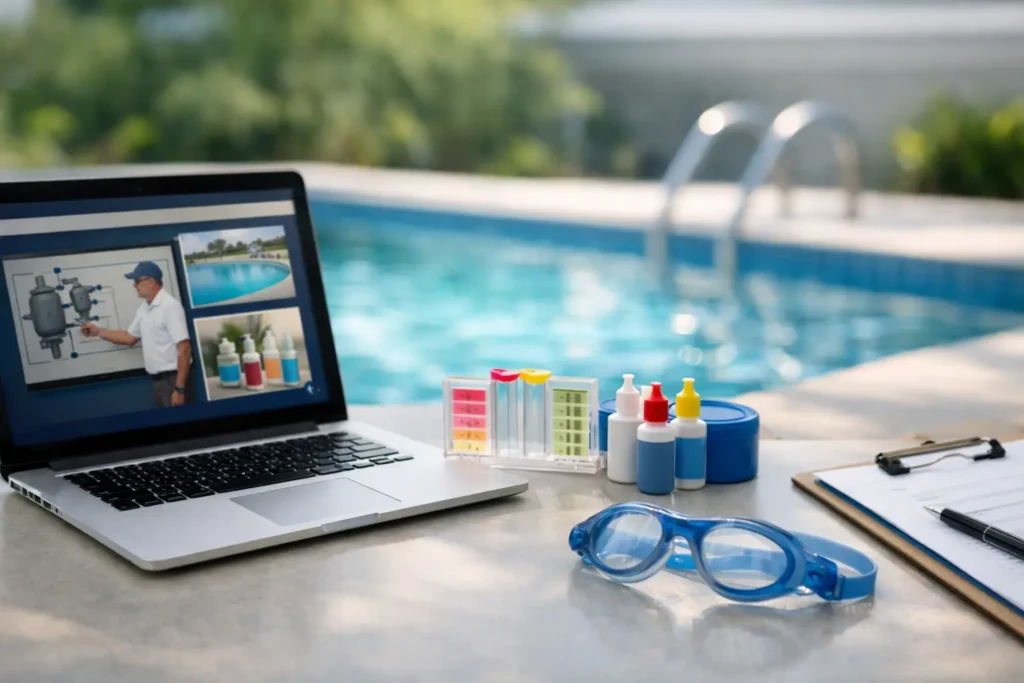
Start with whether instruction is live. Live, instructor-led virtual training gives students the ability to ask questions when a calculation is unclear, a code issue comes up, or a real equipment problem does not match the textbook example. That matters for first-time operators, but experienced technicians benefit too. They can test their existing habits against current standards and get direct clarification from a knowledgeable instructor.
A self-paced course may work for someone who learns well independently and has no urgent questions. The trade-off is that help may be delayed or limited, and there is less opportunity to hear how an instructor applies a concept to hotels, apartment communities, fitness centers, HOAs, and other active facilities. Pool operations are full of variables. A pH reading, chlorine residual, bather load, water temperature, and circulation issue can all change the appropriate next step.
The best online training makes room for those variables. Students should be able to participate, work through examples, and leave with a clearer understanding of why a procedure is required, not just which answer earns a passing score.
Live Online CPO Training: What You Learn
A comprehensive two-day CPO course follows the established curriculum used in traditional in-person instruction. The virtual format changes where students attend, not the professional standard they are expected to meet. When delivered well, it saves travel time while retaining structured instruction and access to an expert instructor.
Core subjects generally include water chemistry, circulation and filtration, disinfection, chemical safety, maintenance procedures, recordkeeping, facility safety, and applicable regulatory responsibilities. These topics connect closely in day-to-day operations. An operator who understands only test-kit readings may miss a circulation problem. An operator who knows equipment but does not understand chemical balance may create unsafe water conditions or waste expensive treatment chemicals.
Pool math deserves particular attention. Many operators are capable, hands-on professionals who have not had to calculate pool volume, chemical dosage, turnover rate, or dilution for years. That is common. It is also why effective training explains the math in plain language and provides opportunities to practice it. A pool math workbook and course handouts can make the difference between briefly recognizing a formula and being able to use it confidently at work.
The course should also make compliance practical. Health department requirements differ by jurisdiction, and some facilities have additional company, insurer, or local operating requirements. A CPO certification is widely recognized and typically remains valid for five years, but students should still confirm the specific requirement that applies to their role and facility. Good training prepares an operator to understand the standards, maintain better records, and know when local rules require a more specific action.
The Real Advantage of No-Travel Training
Online CPO training is most valuable when time is the obstacle. A hotel engineer may not be able to leave the property during a busy period. A pool-service professional may have a full route. An apartment maintenance supervisor may be balancing pool duties with work orders and vendor coordination. Traveling to a classroom can add fuel, hotel costs, meals, and one or more extra days away from work.
A live virtual class removes much of that friction. Students can attend from an appropriate location, complete the same focused two-day instruction, and avoid building a trip around the certification requirement. For employers, this can make it easier to train more than one team member and reduce the operational disruption that comes with off-site classes.
That convenience does require preparation. Online learning is not a reason to multitask through the course. Students need a reliable internet connection, a computer or device that supports the virtual classroom, a quiet space when possible, and the ability to attend for the required schedule. If someone expects to answer service calls, monitor a front desk, or manage a chemical delivery throughout class, the learning experience will suffer.
When Online Training Is the Right Fit
Live virtual CPO instruction is a strong fit for working adults who need certification quickly but still want instructor access. It works especially well for operators who live far from scheduled classroom locations, employers training distributed teams, and professionals who prefer learning from their own office or home rather than adding travel to an already demanding week.
It can also help new operators build a foundation before they are left alone with facility responsibilities. Water chemistry, feeder operation, circulation, and emergency procedures are easier to approach when an instructor explains how the pieces fit together. Questions that may feel basic are worth asking before a problem becomes a closure, a failed inspection, or an unsafe condition.
There are situations where an in-person class may still be preferable. A student who struggles with computer-based learning, has unreliable internet access, or needs a highly controlled classroom setting may do better face-to-face. Online training also does not replace site-specific orientation. Every facility has its own equipment layout, safety procedures, chemical storage conditions, and local inspection history. Certification gives an operator the knowledge base; hands-on familiarity with the actual pool remains essential.
How to Compare Online CPO Course Providers
Course length alone is not enough to judge quality. A fast course is useful only when it includes the required content, allows real participation, and prepares students for the certification process. Before registering, look at how the provider answers a few practical questions.
First, determine whether the class is truly live and instructor-led. A scheduled virtual classroom with an experienced instructor offers a different experience from pre-recorded modules. Next, ask what materials are included and whether students receive resources they can use after class, such as handouts, pool codes, and math practice.
It is also smart to ask how the provider supports students before the course begins. A Headstart or preparatory option can be valuable for people new to pool operations, those who want early access to materials, or anyone who wants extra time with terminology and calculations. Preparation reduces the pressure of encountering every concept for the first time during a two-day class.
Finally, focus on the instructor’s ability to explain complex material clearly. The strongest feedback from students is rarely about flashy software. It is about an instructor who knows the field, answers direct questions, simplifies difficult concepts, and ties lessons to situations students recognize from work.
What a Good Course Changes at the Pool
The benefit of certification should show up after the class, not only on a certificate. A trained operator is better prepared to interpret test results instead of guessing, respond when readings drift out of range, recognize equipment concerns earlier, document routine work, and communicate more effectively with vendors, managers, and inspectors.
That confidence has practical value. Better records can support inspections. Better chemical handling can reduce avoidable risks. Stronger water-balance decisions can protect surfaces and equipment while helping provide a more consistent swimmer experience. No course can eliminate every pool problem, but training gives operators a disciplined method for addressing them.
CPO.Training is designed around that outcome: live, interactive instruction that helps working professionals become certified in two days without sacrificing the practical knowledge needed to operate pools and spas responsibly.
The right course should leave you with more than a completed requirement. It should make your next water test, equipment check, log entry, and inspection conversation easier to handle with professional judgment.