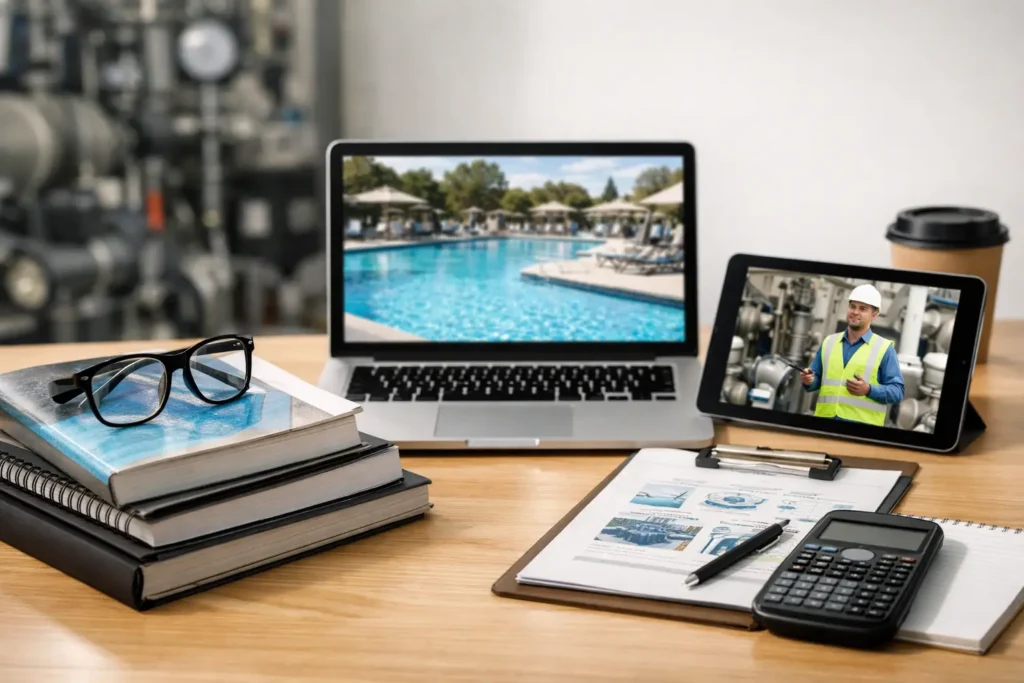
A cloudy pool, a failed inspection, or an unexplained chemical reading rarely gives an operator time to hunt through scattered information. The best CPO study resources help you prepare for certification while building the judgment needed to protect swimmers, meet local requirements, and respond correctly on the job.
For most working operators, the right approach is not collecting every pool book or video available. It is using a focused set of materials that matches the Certified Pool/Spa Operator curriculum, explains the why behind daily procedures, and gives you enough practice to apply the information under real operating conditions.
Start With a Live, Approved CPO Course
A comprehensive CPO course should be the center of your study plan. Certification is not only about memorizing terms for an exam. Operators need to understand circulation, filtration, disinfection, water balance, safety equipment, recordkeeping, and the actions required when conditions are unsafe.
A live, instructor-led class is especially useful for first-time operators and for experienced professionals who have learned primarily in the field. You can ask why a reading is out of range, work through a calculation with guidance, and hear how principles apply to an apartment pool, hotel spa, fitness center, or community facility.
CPO.Training provides this format in a two-day live virtual classroom, allowing students to complete the approved curriculum without travel. That matters when staffing coverage is tight or certification is needed quickly. The online format should still feel interactive: look for real-time instruction, opportunities for questions, and practical examples rather than prerecorded modules alone.
A course gives structure, but its value depends on how you use it. Review the material before class when possible, take notes on topics that affect your facility, and write down questions from your current pool or spa operation. The more specific your questions, the more useful the training becomes.
The Best CPO Study Resources to Use Before and After Class
1. Course handouts and the operator manual
Your official class materials should be your primary reference. They organize the concepts that are most likely to appear in certification instruction and connect them to standard operating practices. Use them to understand the relationship between equipment, water chemistry, safety, and documentation.
Do not try to memorize every page word for word. Instead, mark the sections that answer recurring field questions: how circulation affects water quality, what causes corrosion or scale, when a pool should be closed, and what records must be maintained. After class, these marked sections become a practical desk reference.
2. A pool math workbook
Pool math is where many students lose confidence, even when they have years of maintenance experience. The solution is repetition, not guesswork. A good pool math workbook lets you practice volume calculations, chemical dosing, turnover rate, flow rate, and related conversions until the steps become familiar.
Work each problem by hand first. Even if your facility uses a calculator, chemical controller, or service software, you need to recognize whether the result is reasonable. A calculation that calls for an unrealistic chemical amount can signal a wrong unit, an incorrect pool volume, or a missed decimal point.
Set aside short practice sessions rather than attempting all calculations at once. Ten to fifteen minutes of pool math several times before class is usually more effective than a single long session the night before an exam.
3. Water chemistry reference charts
Chemistry becomes easier when you stop treating each test result as an isolated number. A clear reference chart helps you see how sanitizer, pH, alkalinity, calcium hardness, cyanuric acid, temperature, and bather load can influence water conditions and equipment.
Use charts as a learning tool, not as a substitute for required testing procedures or local rules. For example, a chart may explain why a pH adjustment affects sanitizer performance, but it cannot tell you to ignore the requirements of your health department or the label instructions for a specific chemical.
The goal is to understand cause and effect. If you know why a reading changed, you are more likely to make a measured correction instead of creating a second problem through overcorrection.
4. Equipment diagrams and manufacturer information
Operators should be able to follow the path of water through their own system: from the pool or spa, through suction points and pumps, into filters and treatment equipment, and back through return lines. Equipment diagrams make this easier to visualize, particularly for students who have not worked around commercial systems before.
Manufacturer materials are useful for the equipment installed at your facility, including pumps, filters, feeders, heaters, controllers, and safety devices. They are not a replacement for CPO training, because they cover one product rather than the full operating system. Still, they can help you connect general course concepts to the valves, gauges, and controls you use every day.
If possible, review your equipment room after class and identify each major component. This simple exercise turns abstract instruction into a facility-specific operating plan.
5. Local pool codes and health department guidance
CPO certification establishes a strong professional foundation, but local and state requirements may be more specific. Required disinfectant levels, signage, barriers, recordkeeping, inspection procedures, and operating rules can vary by jurisdiction. California operators, for example, should confirm the requirements that apply to their county or local health authority rather than relying only on general guidance.
Keep current codes and inspection materials accessible at your facility. Review them alongside your course notes, especially if you are preparing for an inspection, opening a seasonal pool, taking over a property, or correcting a violation.
This is also where experienced operators need to stay alert. A method that worked at a previous property may not meet the rules or equipment requirements at a new location.
6. Daily logs and test records
Your own operating records are one of the most useful study resources available. Daily chemical readings, maintenance notes, backwashing records, incident reports, and inspection findings show how classroom concepts appear in the real world.
Review several weeks of logs before class if you have access to them. Look for patterns: recurring pH drift, frequent sanitizer demand, pressure changes across the filter, repeated guest complaints, or missed documentation. Bring those patterns to your instructor or use them as examples when studying.
Well-kept logs also support compliance. They show that testing and corrective actions were performed, and they help the next operator understand what has already happened. A log should tell a clear story, not simply fill boxes on a form.
7. Practice questions, used carefully
Practice questions can help you identify weak areas and get comfortable with the style of certification testing. They are most useful after you have studied the underlying material. If you start by memorizing answers, you may pass a practice set without understanding how to handle a similar situation at work.
When you miss a question, do more than check the correct answer. Find the relevant section in your course material, explain the concept in your own words, and work a related example. This turns a wrong answer into a skill you can retain.
Be cautious with random online quizzes or outdated study sheets. Pool standards, code interpretations, and accepted operating practices can change. A resource with no clear source or date may create confusion when you need reliable guidance.
Build a Study Plan That Fits a Working Schedule
The most effective study plan is short, targeted, and tied to the course schedule. Begin with a quick review of basic terms and your facility’s equipment. Next, spend focused time on water chemistry and pool math, since these are the topics many students need to practice rather than simply read.
After live instruction, review your notes within 24 hours. Rewrite any calculation steps that were unclear, flag questions for follow-up, and connect each major lesson to one task at your facility. For example, after studying filtration, inspect your pressure gauges and review the filter maintenance history. After studying safety, walk the deck and check that required equipment is present and accessible.
For a student with limited time, preparation should be practical. A Headstart or preparatory program can be a good choice when you want early access to course materials, extra time with terminology, or more confidence before entering an intensive two-day class. It is particularly helpful if math has not been part of your daily work.
Choose Resources That Improve Decisions, Not Just Test Scores
The best resource depends on where you are starting. A new property manager may need the full foundation of a live course, code references, and guided math practice. An experienced pool technician may benefit most from updated compliance guidance and a structured review of water balance and documentation. Neither approach should rely on exam shortcuts alone.
Choose materials that help you answer the questions that matter at the poolside: Is this water safe? What caused this reading? What corrective action is appropriate? What must be documented? When should the facility be closed or escalated to a qualified professional?
Certification is a meaningful professional standard, but the lasting value comes from using what you learn every shift. Keep your course materials, math practice, codes, and operating records within reach. When the next unusual reading or inspection question appears, you will have more than a credential – you will have a reliable way to respond.