
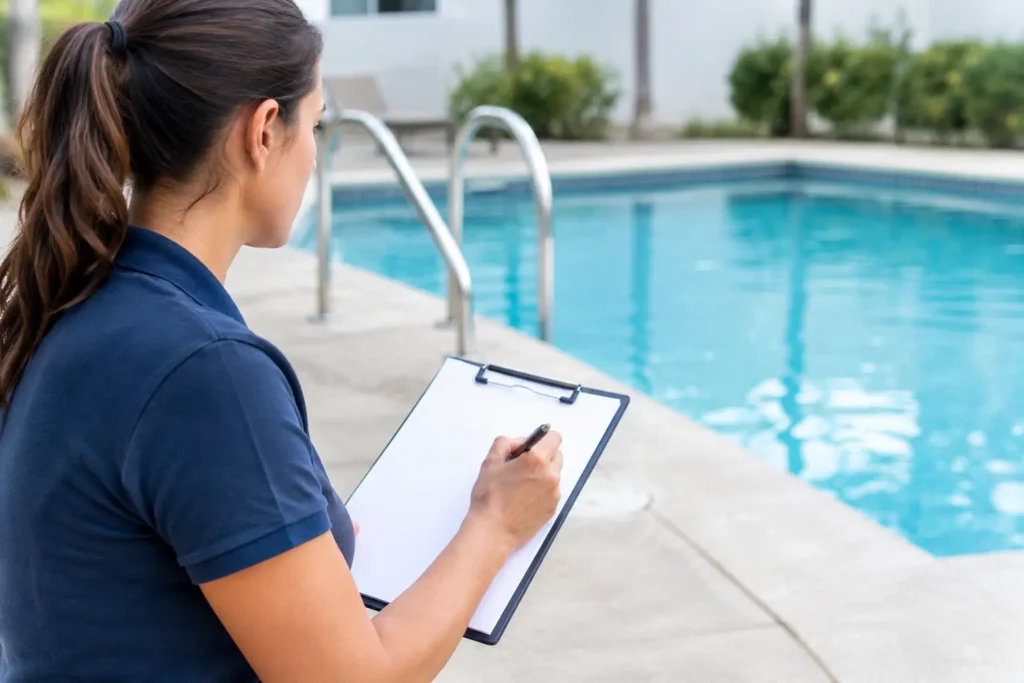
A guest slips on the deck. A child swallows water and is evaluated by EMS. A pump room employee experiences a chemical splash. The immediate priority is always care, supervision, and hazard control. Once the situation is stable, document pool incident reports with the same discipline you bring to water testing and equipment checks.
A complete report does more than create a paper trail. It gives management, insurers, health officials, and your team a factual account of what happened, what was done, and what needs to change. For public and commercial pool operators, that record can help demonstrate that staff responded responsibly and followed the facility’s procedures.
Why pool incident documentation matters
An incident report protects people first and operations second. It captures details that are easy to forget after a stressful event: the exact time, the location, who was present, water conditions, staff actions, and whether emergency services were called.
It also helps identify patterns. One slip near a shower may be an isolated event. Several similar slips may point to drainage, housekeeping, signage, footwear rules, or deck-surface concerns. Repeated reports of eye irritation can warrant a closer look at water balance, ventilation, bather load, or chemical handling practices.
Documentation is particularly valuable when an event leads to an inspection, claim, complaint, or follow-up months later. A report written from memory after the fact is less useful than one completed promptly by the staff member who observed the event.
A report is not an admission of fault. It is a factual operational record. Keep the language neutral, specific, and free of assumptions about blame or medical outcomes.
What belongs in a pool incident report
Your facility should use a consistent form, whether it is paper-based or digital. The format may vary by employer, insurer, local health department, or management company, but the core information should remain consistent.
Start with the basic facts: date, time, facility name, exact location, name and contact information for the person involved, and the names of staff members on duty. If the person is a minor, record the parent, guardian, or responsible adult who was notified.
Next, describe the event in clear chronological order. State what staff observed, not what you think happened. For example: “Guest was found seated on the east deck near the spa steps and stated that their left ankle hurt.” Avoid: “Guest fell because the deck was unsafe.” The first sentence records an observation and statement. The second makes an unsupported conclusion.
Include relevant operational conditions. Depending on the event, this may include the most recent water chemistry readings, water temperature, weather conditions for outdoor facilities, bather load, visibility, lighting, deck condition, signage, barrier or gate status, and equipment status. For a chemical-related event, document the product involved, Safety Data Sheet access, personal protective equipment used, ventilation conditions, and decontamination or spill-response measures taken.
The response deserves its own section. Record first aid provided, the name of the person providing it, EMS activation, police or fire department involvement, guardian notification, facility closure decisions, and the time each action occurred. If no treatment was provided or the individual declined assistance, document that fact plainly.
Finally, document follow-up. This could include removing a trip hazard, closing a spa due to contamination, adjusting chemical feed equipment, preserving security footage, notifying management, or scheduling a repair. A report should show not only the event, but also how the facility reduced the chance of a repeat occurrence.
Write facts, not conclusions
The best reports read like a clear timeline. They avoid dramatic language, opinions, and diagnoses. If someone says something relevant, identify it as a statement: “Patron stated they felt dizzy after using the spa.” Do not write: “Patron became dizzy because the spa was too hot,” unless a qualified authority has made that determination.
Be equally careful with words such as “always,” “never,” “obviously,” and “fault.” They can turn a useful record into an argument. If you did not see an event occur, say so. Document who reported it, when they reported it, and what you observed upon arrival.
Use full names where your policy allows, accurate times, and direct descriptions. “Chlorine tested at 2.0 ppm at 3:18 p.m. using the facility’s DPD test kit” is stronger than “chemicals were fine.” “Gate self-closed and latched when tested after the incident” is stronger than “gate was working.”
If you make an error on a paper form, follow your organization’s correction policy. Do not erase or conceal the original entry. On digital systems, use the approved amendment process so the record remains accurate and traceable.
When the incident involves water quality or contamination
Some of the most consequential pool incidents are not injuries. Fecal accidents, vomiting events, blood contamination, chemical spills, and suspected waterborne illness reports require immediate operational decisions as well as careful documentation.
Record the pool or spa affected, the type of contamination, the time it was discovered, when access was restricted, and the disinfection or cleanup procedure performed. Include chemical readings before and after the response when applicable. If the pool was closed, document the closure and reopening times along with the person who authorized reopening.
Do not rely on a generic note such as “pool shocked.” The appropriate response depends on the type of contamination, existing disinfectant level, pH, circulation, filtration, and applicable health code requirements. Your local authority may have more specific rules, so staff should know the facility’s written response plan before an event occurs.
For chemical exposure, protect the scene and people before completing paperwork. Follow the product label, your emergency action plan, and the Safety Data Sheet. Then document the exposure route, actions taken, emergency contacts made, and any equipment or procedural issue that contributed to the event.
A practical process for documenting pool incidents
A reliable process keeps reporting from becoming an afterthought during a busy shift. Train staff to follow the same sequence every time:
- Stabilize the situation. Provide appropriate aid, activate emergency services when needed, and control immediate hazards.
- Notify the right people. This may include a supervisor, property manager, lifeguard lead, maintenance contact, or local authority, depending on the event.
- Record the report promptly. Complete it while times, statements, and conditions are still fresh.
- Preserve supporting information. Save video according to policy, photograph conditions if authorized, retain test logs, and identify witnesses.
- Complete corrective actions. Repair, clean, close, retrain, or inspect as needed, then record who completed each action and when.
The report should be completed before the end of the shift whenever possible. If an incident is serious or still under review, submit the initial report promptly and add a factual supplement later rather than waiting for every detail.
Documentation should match your emergency action plan
An incident form cannot replace training. Staff need to know who takes charge, who calls 911, who supervises other bathers, who meets responders, and who completes documentation. Those roles may look different at a hotel pool, an apartment community, a recreation center, or a busy aquatic facility with lifeguards.
Review your reporting procedures during staff meetings and after any significant event. Confirm where forms are kept, how reports are submitted, who has access to them, and how long records must be retained. Because privacy rules and record-retention requirements can vary, follow your employer’s policy and applicable state and local requirements.
CPO training helps operators connect these administrative tasks to the operational basics behind them: safe water chemistry, circulation, emergency response, code awareness, and consistent daily records. Certification does not eliminate incidents, but it prepares operators to recognize hazards and respond with greater confidence.
Common reporting mistakes to avoid
The most common mistake is waiting too long. Details blur quickly, especially after staff handle an emergency, speak with upset guests, or return to normal operations. Another is writing too little. “Guest injured” does not explain location, conditions, response, or follow-up.
Overwriting can also create problems. A report does not need a theory of the case or a lengthy defense of staff actions. It needs a precise account. Keep personal opinions, speculation, and unrelated complaints out of the official record.
Do not alter test logs or maintenance records to make them match an incident narrative. Those documents should stand on their own. If you discover a discrepancy, report it through the proper management channel and document the correction transparently.
A well-written pool incident report is one more sign of a professionally operated facility. Treat it as part of the job, not a burden after the job. The next time a situation disrupts the deck or pool area, a calm response and a clear factual record can help protect the people in your care and guide the improvements that make the next shift safer.