
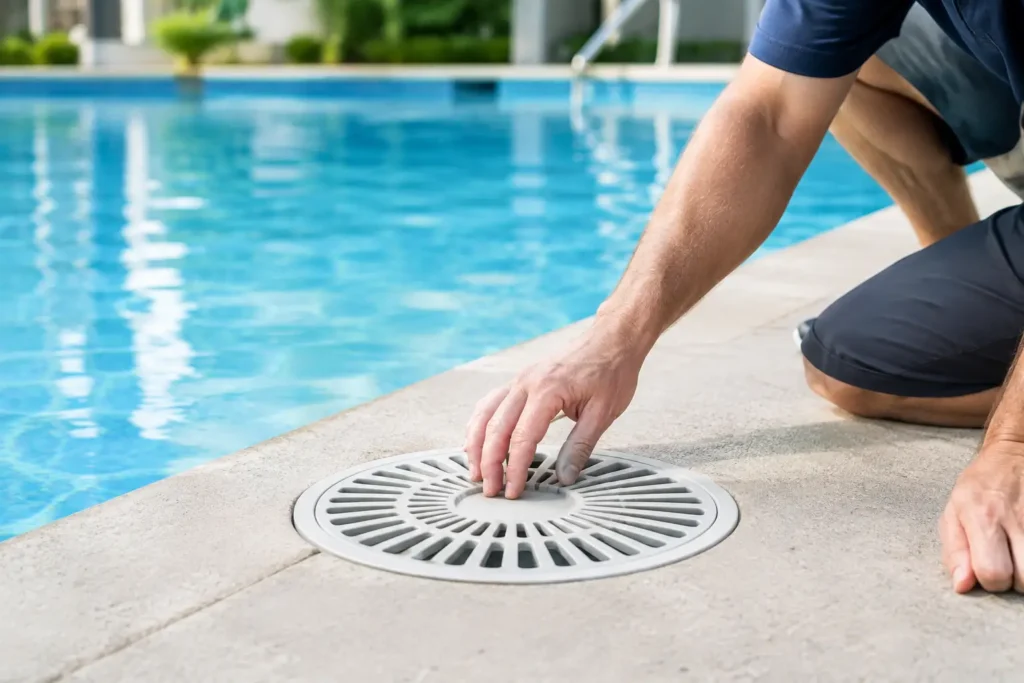
A drain cover can look intact from the deck and still present a serious entrapment hazard. When you inspect pool drain covers, you are not just checking off a maintenance task. You are confirming that a critical safety device is present, secure, correctly matched to the pool system, and within its service life.
For public and commercial pool operators, that distinction matters. A damaged, missing, loose, or expired cover can create immediate risk for bathers and expose the facility to closure, liability, and code violations. A consistent inspection process helps operators find concerns early, document corrective action, and keep the pool open safely.
Why drain-cover inspections deserve special attention
Main drains and suction outlets create powerful hydraulic forces. If a cover is broken, missing, or improperly installed, a swimmer’s hair, clothing, limb, or body can become trapped against the outlet. Federal suction-entrapment requirements for public pools were established to reduce this risk, but compliance is not a one-time installation event.
Drain covers wear over time. Sun exposure, chemicals, impact damage, aging plastic, improper winterization, and aggressive cleaning can weaken a cover or its fasteners. A cover that was compliant when installed may no longer be suitable years later.
Operators should also remember that a drain cover is part of a system. The cover must be appropriate for the sump, piping, flow rate, and outlet configuration. A replacement cover that appears to fit is not automatically an approved replacement. The cover’s listed flow rating and installation instructions must match the specific suction outlet application.
When to inspect pool drain covers
A visual check should be part of the opening routine before swimmers enter the water. This does not need to be a complicated process, but it does need to be deliberate. Look at every suction outlet in the pool and spa, including main drains, equalizer lines, vacuum ports, and other submerged suction fittings.
Perform a more detailed inspection on a scheduled basis and whenever conditions change. That includes after heavy use, severe weather, a pool draining or refill, a chemical incident, resurfacing work, plumbing repairs, or any report that a swimmer felt unusual suction near a drain.
Your local health department may establish specific inspection and documentation rules. Facility policies should meet those requirements and should not wait for a health inspection to identify a problem. If a cover condition is uncertain, treat it as a safety issue until a qualified professional confirms otherwise.
A practical drain-cover inspection process
Begin with the pool closed or with swimmers kept away from the area being evaluated. Good lighting and clear water make inspections more reliable. If water clarity is poor enough that you cannot clearly see the main drain covers, the pool should not be open for use.
From the deck and, when appropriate, in the water, inspect the cover’s overall condition. Check that it is fully seated against the sump and that there are no raised edges, gaps, cracks, missing sections, or visible movement. A cover should not flex excessively or shift when gently checked according to the manufacturer’s guidance.
Pay close attention to the fasteners. Screws should be present, corrosion-resistant, and properly secured. Do not substitute hardware because it appears similar. Drain-cover screws are part of the approved assembly, and an incorrect screw length or material can prevent a secure installation or damage the sump.
Look for these warning signs during every detailed inspection:
- Cracks, chips, warping, discoloration, or UV-related brittleness in the cover
- Missing, loose, stripped, corroded, or mismatched screws
- A cover that rocks, lifts, shifts, or does not sit flush on the sump
- An unreadable or missing manufacturer label, flow rating, or service-life date
- Debris buildup, damaged grating, or altered openings that affect water flow
Do not rely on appearance alone when checking service life. Many approved drain covers have a marked installation date or a manufacturer-designated replacement date. The date may be molded into the cover, printed on a label, or recorded in facility maintenance records. Once a cover reaches the end of its stated life, replace it even if it appears undamaged.
Check the cover label and system match
The label provides information an operator needs to verify continued suitability. Depending on the product, it may identify the manufacturer, model, approval standard, maximum flow rating, installation instructions, and expiration date. Record this information when a cover is installed rather than waiting until it becomes difficult to read.
The maximum flow rating is especially significant. Pump changes, variable-speed programming adjustments, plumbing modifications, or added water features can change suction conditions. A cover must be rated for the actual flow at that outlet. This is a technical determination, not a guess based on cover size.
If the label is missing or unreadable, do not assume the cover is compliant. Use your records to identify the product, or have a qualified pool professional evaluate and replace it. Documentation is often the fastest way to resolve questions during a health department inspection.
What not to do during an inspection
Do not remove a drain cover while the circulation system is operating. Never place hands, feet, tools, or test objects over an active suction outlet to judge suction strength. These practices create unnecessary danger and do not establish whether the system is compliant.
Avoid treating a safety vacuum release system, automatic pump shutoff, or multiple-drain configuration as permission to overlook a damaged cover. Supplemental anti-entrapment protection may be required or beneficial depending on the pool design, but it does not make a broken, loose, or expired cover acceptable.
If the cover needs removal for replacement or a technical evaluation, follow the manufacturer’s instructions and facility lockout procedures. Shut down circulation equipment, prevent unauthorized restart, and use a qualified pool technician when the work involves sump condition, plumbing, hydraulic flow, or safety-device configuration.
What to do when you find a problem
A missing, broken, loose, or expired drain cover calls for immediate action. Clear swimmers from the pool or affected body of water, close it to use, and shut off the pump when appropriate for the condition. Do not reopen simply because the water chemistry is balanced or the problem seems minor.
Document what you found, including the date, outlet location, cover model if known, and any actions taken. Photographs can be useful for maintenance records and for communicating clearly with a service provider. Then arrange for a correct, listed replacement that matches the sump and system requirements.
For multi-pool properties, inspect every pool and spa independently. A property may have different cover types, installation dates, pump capacities, and outlet configurations across its facilities. One compliant pool does not establish compliance at another.
Make drain-cover checks part of your operating record
The best inspection program is the one your team can perform consistently. Add suction outlets to daily opening checks, keep a separate detailed drain-cover log, and train staff to escalate concerns instead of trying improvised repairs. This is particularly valuable at hotels, apartments, HOAs, fitness centers, and recreation facilities where multiple employees may share pool duties.
A strong log should identify each outlet, the cover make and model, installation or replacement date, expiration date, inspection dates, observed condition, and corrective work completed. Keep manufacturer instructions with those records. If turnover occurs, the next operator should be able to determine cover status without searching through old invoices or relying on memory.
CPO certification training helps operators connect this type of inspection work to the larger responsibilities of circulation, safety, code compliance, and facility documentation. The goal is not to turn every operator into a hydraulics engineer. It is to know what requires immediate action, what information to preserve, and when to bring in qualified technical support.
A drain cover rarely becomes a priority until it fails an inspection or raises a safety concern. Make it a priority before that happens. A few focused minutes at opening, supported by accurate records and timely replacement, protect your guests and demonstrate the professional standard your facility is expected to meet.