A hotel maintenance manager needs a CPO certification before the busy season. An HOA board wants proof that its pool operator meets county requirements. A pool-service professional cannot afford two weekdays away from clients. In each case, the question is the same: is online CPO valid?
Usually, an online CPO course can lead to a valid certification when it is delivered through an approved program, meets the required curriculum, and follows the certification provider’s current attendance and examination rules. But the word “online” does not answer the whole question. The course format, instructor involvement, certification process, and your local health department’s requirements all matter.
Is Online CPO Valid for Public and Commercial Pools?
A CPO certification earned through a properly approved live virtual class is generally a legitimate professional credential. The key distinction is between a live, instructor-led virtual classroom and an unverified self-paced course that simply provides slides or a downloadable certificate.
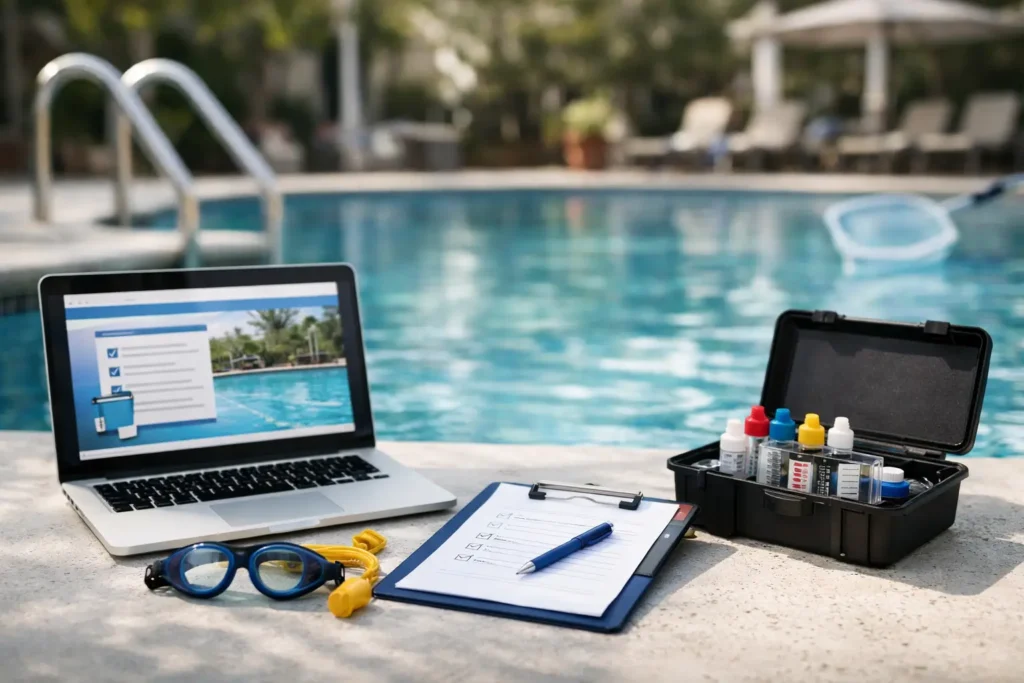
A quality live online CPO class covers the same operating fundamentals expected in traditional training: water balance, disinfection, testing, circulation, filtration, safety, recordkeeping, and applicable codes. Students attend scheduled sessions, participate with an instructor, ask questions, work through practical examples, and complete the required certification assessment under the program’s procedures.
For a working operator, that means the format can save travel time without reducing the purpose of the course. You are still learning how to respond when chlorine readings drift, a filter pressure rises, a spa creates a safety concern, or an inspection reveals missing documentation. Those are field responsibilities, not just exam topics.
That said, acceptance is never a reason to assume. Public and commercial pool rules are enforced locally. A county, city, state, employer, franchise, or insurance carrier may have its own requirements for who must be certified and which credentials it recognizes.
What Makes an Online CPO Course Legitimate?
The most reliable way to evaluate online training is to look beyond the course title. “Online CPO” can describe very different products. A legitimate option should be transparent about how instruction is delivered, who teaches it, what curriculum is used, and how certification is issued.
Live instruction is more than a convenience
Live virtual training gives students direct access to an instructor while they are learning technical material. That matters when the issue is not obvious from a chart or formula. For example, a student may understand a saturation index calculation but still need help connecting it to scaling, corrosion, bather comfort, and equipment life.
In a live class, questions can be addressed before they turn into operating mistakes. Instructors can also explain how broad CPO principles apply to real facilities, including apartment pools, hotel spas, fitness centers, community pools, and service routes.
The curriculum and assessment must meet program standards
Valid certification is tied to the requirements of the credentialing organization, not to whether a student sat in a hotel meeting room. Approved virtual delivery can use the established CPO curriculum while providing instruction through a virtual classroom.
Confirm that the course includes the required training time and assessment process. Ask whether attendance is monitored, whether the class is instructor-led, and how the examination is administered. A provider should give direct answers, not vague assurances that you will be “certified instantly.”
A certificate alone is not proof of quality
Many online courses issue completion certificates. That does not automatically make them CPO certifications recognized by an employer or regulator. A completion certificate may show that you watched a program, while a recognized certification reflects completion of the required training and testing process.
Before enrolling, verify exactly what credential you will receive, how long it remains active, and whether it is listed or verifiable through the appropriate certification system. CPO certification is commonly valid for five years, but operators should always confirm the current terms associated with their specific credential.
Why Local Requirements Still Matter
CPO certification is widely recognized, but pool compliance is local. Health departments set and enforce requirements for public and commercial aquatic facilities within their jurisdiction. Some require a certified operator on staff. Others specify that a certified person must be available within a certain response time, while a few may require additional local training or documentation.
California operators, for example, should review the rules that apply to their county and facility type rather than relying on a statewide assumption. The same advice applies everywhere in the United States. A recreation center, hotel, HOA, and waterpark can face different expectations even when they operate in the same general area.
Call or check with the authority having jurisdiction before class if you have a deadline tied to an inspection, permit, opening date, or corrective action. Ask a focused question: “Does your department accept CPO certification completed through a live, instructor-led virtual course?” Keep the answer with your compliance records if needed.
Your employer may also have a policy that goes beyond the local minimum. A management company might require a specific credential, a current certification card, or annual internal safety training. Certification helps establish professional competence, but it does not replace facility-specific procedures, local code knowledge, or daily testing and recordkeeping.
How to Choose a Valid Online CPO Course
Start with your deadline. If a health department inspection is approaching, do not wait until the final week to determine whether a self-paced course will be accepted. Choose a scheduled program that clearly explains its timing, attendance expectations, exam process, and certificate delivery.
Then consider whether you need additional preparation. First-time operators often benefit from early access to course materials, a pool math workbook, code resources, and extra time to become comfortable with chemistry calculations. Experienced technicians may be more focused on current standards, documentation, and applying their field experience to the certification exam.
Look for an instructor who can make technical topics usable. Pool operation includes formulas and regulatory terms, but the work is practical. You need to know why a test result is outside range, which adjustment to make first, how equipment affects water quality, and when a condition requires closing a pool or spa.
A two-day live virtual format can be a strong fit for busy professionals because it provides concentrated instruction without travel, hotel costs, or lost time commuting to a classroom. The trade-off is that students need to protect the class time. Log in on time, participate fully, use a reliable internet connection, and arrange coverage for on-site duties when possible.
Questions to Ask Before You Register
Before selecting a course, get clear answers to these practical questions:
- Is the class live and instructor-led, or is it entirely self-paced?
- Does it follow the approved CPO curriculum and required training process?
- How are attendance, participation, and the certification exam handled?
- What credential will I receive after successfully completing the course?
- Will my local health department and employer accept this credential?
These questions take only a few minutes, and they can prevent the far more expensive problem of completing a course that does not meet a job or regulatory requirement.
Valid Certification Should Improve Daily Operations
The value of a valid online CPO course is not limited to satisfying a hiring manager or passing an inspection. Good training gives operators a stronger framework for making decisions when conditions change. It helps them recognize unsafe water conditions, maintain equipment more effectively, document work accurately, and communicate clearly with owners, boards, staff, and inspectors.
For many professionals, live virtual training offers the most practical route to that result. CPO.Training delivers instructor-led online classes designed to provide the established curriculum in a focused two-day format, with no travel required.
If you are responsible for a public or commercial pool or spa, treat certification as part of the operating plan, not a box to check after a problem occurs. Confirm local acceptance, choose an approved live course, and give yourself enough time to learn the material well. The credential should support the work you do every day: keeping water safe, facilities compliant, and swimmers protected.