
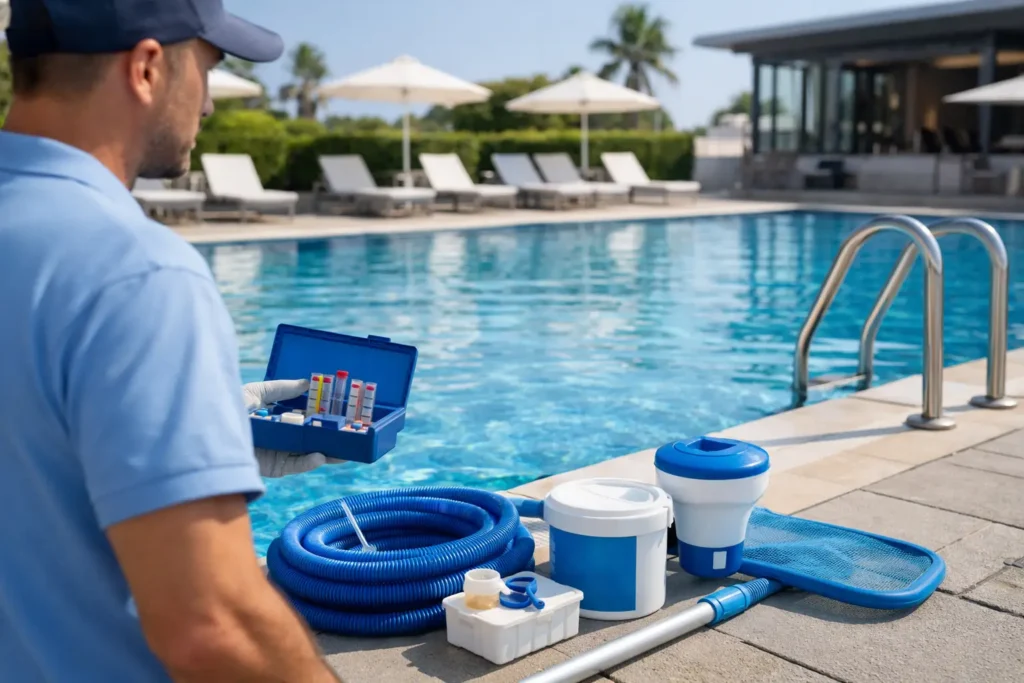
A clear pool can still be unsafe to open. When the cover comes off, commercial pool operators need more than a quick chemical test and a running pump. Pool opening procedures must confirm that the water, circulation system, safety equipment, records, and required inspections are ready for bathers. For hotels, apartments, HOAs, gyms, and recreation facilities, a disciplined opening protects guests and helps prevent the expensive disruption of a failed inspection or water-quality incident.
Pool Opening Procedures Start With a Site Assessment
Before energizing equipment or adding chemicals, inspect the entire pool area. Remove covers carefully and keep accumulated debris, stagnant water, and contaminants from entering the pool. A damaged cover, unsecured deck drain, or loose handrail can turn a routine opening into a safety issue before circulation even begins.
Walk the deck and examine the basin. Look for cracks, sharp edges, damaged tile, loose coping, missing depth markers, and deteriorated grout. Confirm that ladders, rails, diving equipment, lane lines, and starting blocks, where provided, are secure and in serviceable condition. Inspect skimmer weirs, main-drain covers, equalizer lines, and vacuum fittings for damage or missing components.
This is also the time to review the facility’s local health code and reopening requirements. Requirements vary by jurisdiction. Some health departments require a pre-opening inspection, documentation of water chemistry, or proof that a qualified operator is available. Do not assume last season’s checklist still reflects this season’s rules.
Start the Circulation System Safely
A pool cannot be opened responsibly until the circulation and filtration system is operating as designed. Begin with a visual inspection of the equipment room. Check for standing water, leaks, corrosion, damaged electrical components, unsecured chemical containers, and blocked access around pumps, filters, heaters, and controllers.
With power off, inspect pump baskets, strainers, valves, gauges, filter clamps, and plumbing unions. Replace damaged O-rings and gaskets before startup. Verify that valves are positioned correctly for normal circulation and that any winterizing plugs have been removed. If the pool was winterized with antifreeze or other products, follow the appropriate disposal and flushing procedures before placing the system back in service.
Prime the pump according to the manufacturer’s instructions, then start the system and watch it closely. A pump that loses prime, pulls air, or produces unusual noise needs attention before the pool opens. Record filter pressure once the system reaches normal operation. That clean-pressure reading becomes the reference point for determining when the filter needs cleaning or backwashing later in the season.
Check return inlets for proper flow and look for leaks at valves, pump seals, heater connections, and filter tanks. If a heater is used, confirm water flow before enabling it. Heaters, especially gas-fired units, should be inspected for safe operation, proper venting, and error codes. Electrical repairs, gas work, and major equipment service belong to qualified professionals.
Restore Water Level and Remove Debris
Bring the water to the proper operating level, generally around the middle of the skimmer opening unless the equipment manufacturer or local code specifies otherwise. Low water can cause the pump to draw air and lose prime. Excessively high water can reduce skimming action and leave surface debris in the pool.
Vacuum settled debris and brush walls, floors, steps, gutters, and hard-to-reach corners. Opening algae may cling to surfaces even when the water initially looks acceptable. Brush before and during treatment so sanitizer can reach affected areas and the filter can capture suspended material.
Do not rush this step by relying only on a clarifier or algaecide. Those products may have a place in a specific treatment plan, but they do not replace circulation, brushing, filtration, and correct sanitizer control. If water is severely cloudy, green, or contaminated, keep the pool closed until it meets all operating standards.
Test and Balance the Water in the Right Order
Water chemistry at opening is about control, not guesswork. Use a reliable test kit or approved photometric testing method, and verify that reagents are current. Test strips can provide a quick field screen, but commercial facilities often need more precise results for adjustment decisions and log records.
Start by testing the major operating factors: sanitizer residual, pH, total alkalinity, calcium hardness, cyanuric acid when applicable, water temperature, and total dissolved solids as needed. The target ranges depend on the sanitizer system, pool surface, source water, local code, and facility type. A stabilized outdoor chlorine pool, for example, has different management concerns than an indoor pool or a brominated spa.
Correct chemistry in a deliberate sequence. Total alkalinity is commonly adjusted before fine-tuning pH because alkalinity affects pH stability. Calcium hardness deserves attention as well. Water that is too aggressive can damage plaster, grout, metal components, and heaters; water that is highly scale-forming can restrict circulation and reduce heater efficiency.
Establish and maintain the required sanitizer residual before allowing bathers in the water. If the pool needs shock treatment or breakpoint chlorination, follow the chemical label, facility procedures, and local code for dosing, circulation, retesting, and required closure time. Never mix chemicals, never add water to chemical products, and never handle incompatible products in the same container. Add chemicals to water as directed, use appropriate protective equipment, and keep the chemical room dry, ventilated, and secure.
Verify Safety Features Before Opening the Gate
A public or commercial pool is not ready simply because its chemistry is within range. Test the equipment and controls that protect patrons during normal operation and emergencies. This includes circulation-system emergency shutoffs, chemical-feed controllers and alarms, required flow or pressure protection, and any automated safety devices installed at the facility.
Inspect the enclosure, gates, self-closing and self-latching hardware, required signage, depth markers, lifesaving equipment, emergency phone or communication device, and first-aid supplies. Confirm that lifesaving rings, reaching poles, and other required equipment are visible, accessible, and in usable condition.
Pay particular attention to suction safety. Main-drain covers must be intact, properly secured, and compatible with the installed sump and flow rating. Missing, cracked, or improperly installed drain covers are not minor maintenance items. Close the pool and arrange qualified service if you identify a suction-entrapment concern.
For spas, verify the emergency shutoff is clearly marked and functional. Spa water heats quickly, and high bather loads can change water chemistry faster than many operators expect. Opening a spa requires the same disciplined approach as a pool, with additional attention to temperature, disinfectant demand, and timed circulation.
Document the Opening and Set a Daily Routine
Opening-day records create a baseline for the season. Log the date, operator, water-test results, chemical additions, equipment readings, filter pressure, water temperature, repairs completed, and any conditions that kept the pool closed. If an inspector, manager, or vendor needs to understand a later problem, these records show what the system was doing from the start.
Once the facility opens, establish a repeatable daily routine. Test water at the frequency required by code and facility policy, inspect the deck and safety equipment, verify circulation, empty baskets, review controller performance, and record results. High bather load, storms, heat, contamination events, and equipment changes may require more frequent testing and adjustments.
When to Keep the Pool Closed
Operators sometimes feel pressure to open on schedule, especially before a holiday weekend or a major event. The better decision is to delay opening when water clarity is poor, required sanitizer is not maintained, circulation is inadequate, safety equipment is missing, or a code-required inspection has not been completed. A short closure is easier to manage than an injury, illness complaint, equipment failure, or enforcement action.
Training Turns a Checklist Into Good Judgment
A checklist supports consistency, but it cannot replace operator judgment. Chemical interactions, equipment symptoms, and local code requirements often require someone who understands why each step matters. CPO.Training helps working pool and spa professionals build that practical knowledge through live, instructor-led certification training without the travel and downtime of a traditional classroom.
The best opening is not the fastest one. It is the one that gives your staff, your facility, and your guests a safe start to the season – with clean water, functioning equipment, complete records, and no unresolved question about whether the pool should be open.