A clear pool is not automatically a safe pool. Water can look inviting while sanitizer is low, circulation is compromised, or a drain cover has become unsafe. That is why pool operator responsibilities go far beyond adding chemicals or skimming leaves. For public and commercial facilities, the operator is the person who turns daily procedures, equipment knowledge, and health-code requirements into a safe experience for every swimmer.
Whether you manage an apartment community, hotel, gym, HOA, school, or recreation facility, your work protects people and helps the property stay open. The details matter: a missed reading, incomplete log, or delayed repair can quickly become a health, safety, and compliance problem.
What Pool Operator Responsibilities Cover
A pool operator oversees the daily condition of the pool or spa, the systems that support it, and the documentation that shows the facility is being managed properly. The exact duties depend on your state and local health department, facility type, bather load, and equipment. A high-use hotel spa, for example, may need more frequent attention than a lightly used residential community pool.
Still, the core responsibilities are consistent. Operators must maintain balanced and properly disinfected water, inspect equipment and safety features, respond to unsafe conditions, keep accurate records, and understand when a pool must be closed. They also need to communicate clearly with management, service vendors, lifeguards, maintenance staff, and health inspectors.
Certification does not replace local rules. It gives operators the technical foundation to apply those rules correctly and recognize issues before they become costly closures or swimmer incidents.
Maintain Safe Water Chemistry
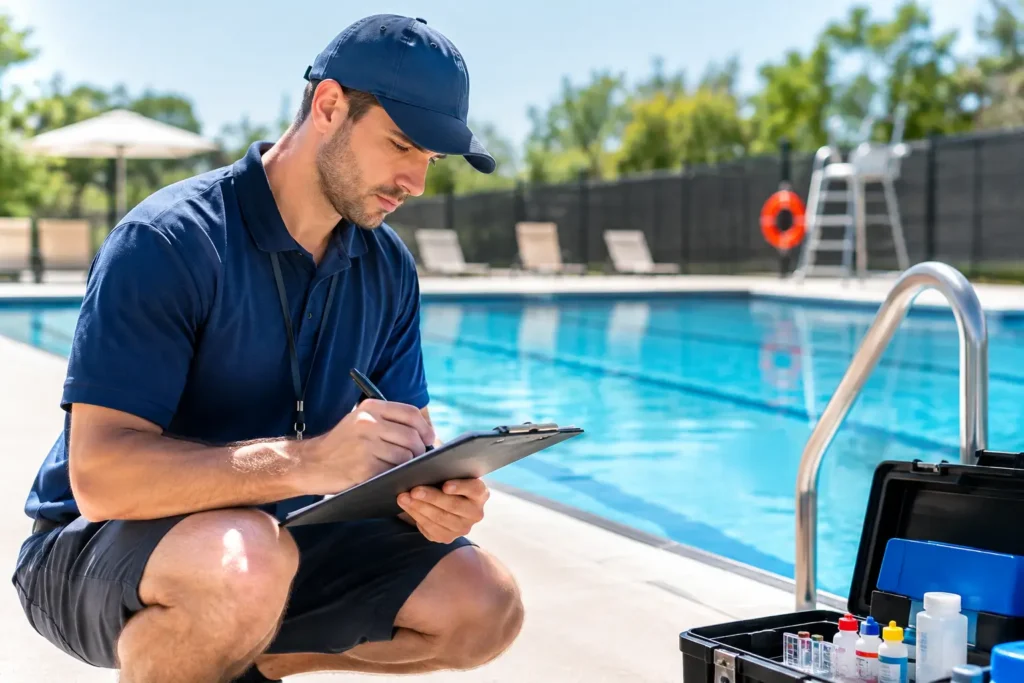
Water chemistry is the most visible part of the job, but it is not a set-it-and-forget-it task. Operators test water at the frequency required by local regulations and whenever conditions change, such as after heavy use, a storm, a contamination event, or a chemical adjustment.
Testing commonly includes disinfectant residual, pH, total alkalinity, calcium hardness, cyanuric acid where applicable, and water temperature. Depending on the facility and treatment system, additional tests may be necessary. The goal is not merely to hit a number on a test strip. Each reading affects how effectively the sanitizer works, how comfortable the water feels, and whether the water may damage surfaces and equipment.
Low disinfectant can allow harmful microorganisms to survive. Excessive disinfectant can irritate swimmers and corrode equipment. A pH level that is too high can reduce chlorine effectiveness, while a level that is too low can create corrosive water. Good operators look at the relationship between readings rather than correcting one number in isolation.
Chemical handling is equally important. Store products according to their labels and applicable fire, building, and health requirements. Keep incompatible chemicals separated, use appropriate personal protective equipment, and never mix chemicals. When an adjustment is needed, calculate the proper dose for the pool volume, add chemicals safely, allow adequate circulation, and retest before assuming the issue is resolved.
Know When Water Conditions Require Closure
One of the most important pool operator responsibilities is making a defensible decision to close a pool or spa when it is unsafe. That may mean closing because disinfectant is outside the required range, water clarity prevents a clear view of the main drain, the circulation system fails, or a contamination incident occurs.
Closing a pool can feel inconvenient, especially during a busy weekend or at a property with demanding guests. Yet an early closure is usually far less disruptive than an illness complaint, injury, failed inspection, or emergency response. A trained operator knows that reopening should happen only after the underlying condition has been corrected and documented.
Inspect Equipment and Circulation Systems
A pool depends on circulation to filter water, distribute sanitizer, and prevent stagnant conditions. Operators should understand the path water takes through the system: from the pool through skimmers and main drains, into pumps, filters, heaters or treatment equipment, and back through the returns.
Daily checks should include water level, pump operation, filter pressure, flow indicators, leaks, unusual noises, and visible damage. A pressure change at the filter may signal that cleaning or backwashing is needed, but the correct response depends on the equipment manufacturer’s instructions and the facility’s operating procedures. Backwashing too often wastes water and can reduce filtration performance. Waiting too long can restrict flow and strain the system.
Operators should also watch for air entering the system, poor return flow, cloudy water, broken gauges, and pump baskets that need cleaning. These are not minor maintenance details. They can affect water quality quickly, particularly at facilities with high bather loads.
Protect Swimmers Through Physical Safety Checks
Water quality is only one part of safe operation. The pool deck, barriers, signage, drains, ladders, handrails, lighting, and emergency equipment deserve regular inspection.
Before opening, look for damaged or missing drain covers, loose handrails, sharp edges, trip hazards, broken fencing, self-closing gate failures, and missing safety signage. Confirm that required rescue and first-aid equipment is accessible and in usable condition. If your facility uses safety vacuum release systems or other entrapment-prevention features, make sure they are maintained according to manufacturer and regulatory requirements.
Spa areas need especially close attention. Higher water temperatures can increase discomfort and risk for certain users, while smaller water volume means chemistry can change rapidly. Posted rules, maximum temperature requirements, and bather limits should be treated as operating controls, not decorative signs.
Keep Accurate, Useful Records
A pool log is more than paperwork for an inspector. It is the facility’s operating record. A complete log helps you identify recurring problems, show that corrective steps were taken, and give another trained employee a clear picture of what happened during a shift.
Document test results, chemical additions, equipment readings, filter maintenance, repairs, incidents, closures, and reopening actions. Record the time of each entry and use actual readings rather than vague notes such as “chemicals checked.” If a reading is outside the required range, note what you did and the follow-up test result.
Good records are particularly valuable when a manager asks why the pool was closed, a vendor needs to diagnose a recurring equipment problem, or a health inspector reviews facility practices. They also make shift handoffs safer. The next operator should not have to guess whether a chemical adjustment was made or whether a pump issue was already reported.
Respond Correctly to Incidents and Complaints
An operator may need to respond to fecal contamination, vomit, blood, glass, a chemical spill, a power outage, or a swimmer complaint about illness or irritation. These events require a calm, procedure-based response, not a quick guess.
Your facility should have written procedures for common incidents, along with the supplies and contact information needed to carry them out. For contamination events, the necessary closure time and disinfection response can vary based on the type of incident. Follow local health department requirements and established public-health guidance. Do not reopen simply because the water looks normal.
Complaints also deserve attention. Repeated reports of eye irritation, strong chemical odor, cloudy water, slippery decking, or cold water may reveal a chemistry, ventilation, circulation, or maintenance issue. A strong operator listens, investigates, documents, and corrects the cause rather than dismissing the symptom.
Coordinate People, Vendors, and Compliance
Many operators are not the only people working around the pool. Property managers may control budgets, maintenance teams may perform repairs, service companies may handle scheduled work, and front-desk staff may receive guest complaints. The operator’s role includes making sure critical information reaches the right person quickly.
Be specific when reporting a problem. Instead of saying the equipment room “doesn’t look right,” report the measured condition: filter pressure, flow reading, chemical result, visible leak location, alarm status, or affected equipment. Clear details help management prioritize repairs and help vendors arrive prepared.
Local codes can differ significantly, including requirements for certification, testing frequency, safety equipment, signage, fencing, and records. In California and other jurisdictions, health departments may enforce additional local requirements. Review the rules that apply to your facility rather than relying on a procedure used at another property.
Build Confidence Through Operator Training
The best operators do not rely on memory alone. They understand why chemistry changes, how circulation affects treatment, what readings signal a problem, and when an issue exceeds routine maintenance. That knowledge makes the work faster and less stressful.
A live, instructor-led CPO course can help operators connect pool math, water chemistry, safety practices, and compliance requirements to the situations they face on the job. For first-time operators, that foundation makes daily duties more manageable. For experienced professionals, it is a practical way to refresh standards and strengthen decision-making before a small issue becomes a closure.
The next time you complete a pool log or walk the equipment room, treat it as more than a routine task. Each accurate reading, inspection, and corrective action is part of the work that keeps swimmers safe and your facility ready to operate.