
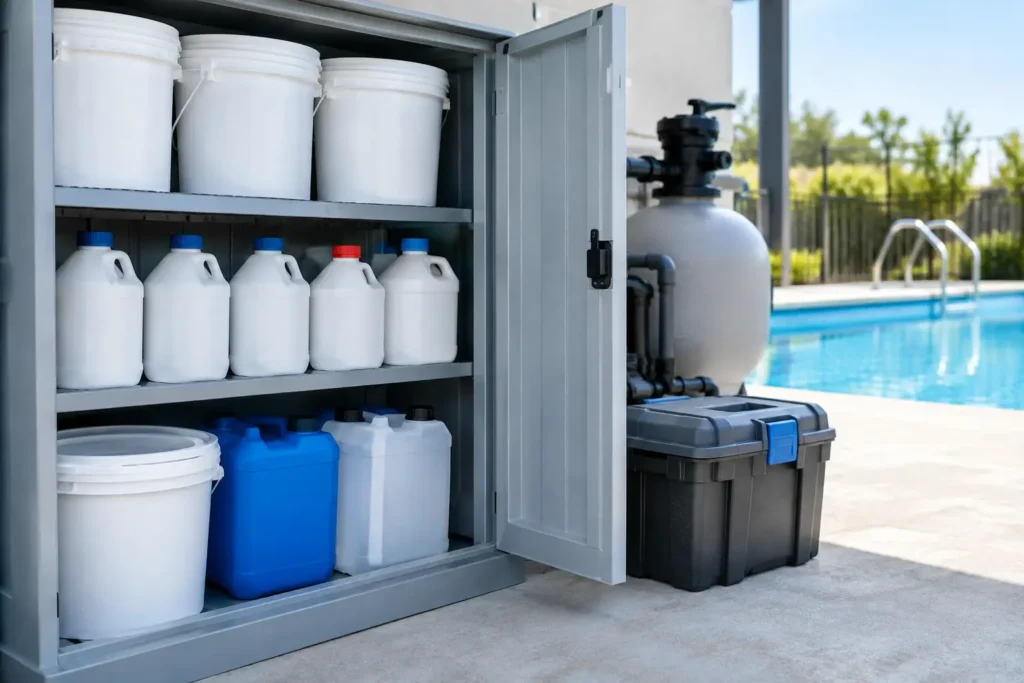
A chemical room can look orderly and still create a serious hazard. A damp bucket, an unlabeled transfer container, or two products stored too close together can turn a routine service task into an exposure, fire, or violent reaction. This pool chemical storage guide gives public and commercial pool operators a practical framework for protecting staff, guests, and the facility while supporting health and fire code compliance.
Start With the Chemical Room, Not the Shelf
Safe storage begins with a dedicated space. Pool chemicals should not share a room with tools, landscaping supplies, fuel, paint, cleaning products, food, or general maintenance inventory. The room needs to be secure from guest access, clearly identified, and available only to trained personnel.
Choose a clean, dry, well-ventilated area that is protected from direct sunlight, rain intrusion, and flooding. Heat and moisture shorten the usable life of many products and can contribute to decomposition or pressure buildup. A chemical room that feels humid, has a leaking pipe overhead, or regularly gets wet during deck washing needs correction before more product is brought in.
Ventilation matters for worker safety and product stability. Do not assume an open door is adequate ventilation, particularly in an enclosed equipment area. Follow the product label, Safety Data Sheet, local fire requirements, and applicable building codes for the specific products on site. Some jurisdictions impose additional rules for chemical-room construction, mechanical ventilation, secondary containment, signage, and quantity limits.
Keep Incompatible Chemicals Apart
The most critical rule in pool chemical storage is simple: never store products based only on container size or available shelf space. Store them by chemical compatibility.
Chlorine products are oxidizers. They must be kept away from acids, petroleum products, organic materials, fertilizers, solvents, and many common cleaners. An acid and chlorine product can create toxic chlorine gas if they contact each other. Oxidizers that contact combustible materials can intensify a fire.
This is especially relevant when a facility uses both muriatic acid and dry or liquid chlorine products. They may both be standard parts of water treatment, but they should be physically separated. Use separate storage areas, separate spill containment where required, and a clear arrangement that prevents a leak from one product reaching another.
Calcium hypochlorite deserves particular attention. It is a powerful oxidizer and should remain in its original container, dry, and separated from incompatible materials. Never place it near acids, trichlor tablets, dichlor, bromine products, oil, grease, rags, or debris. Do not assume all products labeled “chlorine” are compatible with each other. Read each label and SDS.
A practical layout uses dedicated zones: one for oxidizers, one for acids, and one for other approved pool-treatment products. The exact separation method depends on the products, quantity stored, the room design, and local code. When in doubt, use the manufacturer instructions and ask the authority having jurisdiction or fire official for direction.
Leave Chemicals in Their Original Containers
Original containers provide the label, hazard information, directions, lot information, and appropriate packaging for the product. Do not transfer pool chemicals into drink bottles, food containers, unmarked pails, or generic spray bottles. A container without a clear label is not a minor housekeeping issue. It creates a direct risk of misapplication and accidental exposure.
Keep labels readable and facing outward. If a label becomes damaged, contact the manufacturer for guidance or replace the container when appropriate. Never rely on memory, marker shorthand, or the color of a product to identify it.
Keep each container tightly closed when it is not in use. This limits moisture exposure, reduces contamination, and prevents fumes from spreading through the room. Do not reuse empty chemical containers for any other purpose. Follow label directions and local requirements for disposal.
Control Moisture, Contamination, and Housekeeping
Many pool chemical incidents start with contamination rather than a major equipment failure. A wet scoop used in dry chlorine, a dirty measuring cup, or spilled product swept into a mixed waste pile can create a dangerous reaction.
Use only clean, dry, dedicated tools for each chemical. Label scoops and measuring devices by product when practical, and never use one scoop across different products. Store these tools so they stay dry and cannot fall into another container.
Keep chemicals off the floor on stable, corrosion-resistant shelving or pallets. Lower shelves are generally safer for heavier containers, while shelves should be designed to prevent containers from tipping or falling. Do not stack products beyond the manufacturer recommendation, and do not overfill the room simply because a delivery arrived early.
Good housekeeping also means removing cardboard, trash, rags, leaves, and unnecessary supplies from the chemical area. These materials can absorb spills, retain moisture, or serve as fuel around oxidizers. Inspect floors, shelves, caps, and containers during regular rounds. Crystalline residue, bulging containers, discoloration, leaks, strong unexpected odors, or heat near a container are warning signs that require immediate attention.
Receive Deliveries With a Storage Plan
A delivery is not complete when the driver leaves. Before accepting a shipment, confirm that the chemical room has capacity and that staff know where each product belongs. Storing a new pallet temporarily in a pump room, hallway, or electrical area can create a violation and make emergency access more difficult.
Inspect containers for damage, leaking caps, wet packaging, or missing labels. Segregate compromised containers from other products and follow the supplier’s and manufacturer’s instructions. Do not place a leaking acid container next to chlorine while deciding what to do next.
Use first-in, first-out inventory practices where appropriate. Older product should be used before newer stock, provided the container is sound and the product remains within its recommended storage period. Keep purchase quantities realistic. Bulk buying may lower unit cost, but excess inventory raises storage risk and can leave the facility with degraded or expired product.
Prepare for Spills Before One Happens
Every chemical storage area should have an emergency plan that matches the products on site. Staff need to know who to notify, when to evacuate, where emergency information is located, and when a spill requires outside response rather than an in-house cleanup.
Keep current Safety Data Sheets accessible to employees. They should be easy to find during a real incident, not buried in an office file cabinet. Train staff to review the SDS and label before handling unfamiliar chemicals, even if they have worked around pools for years.
Appropriate personal protective equipment may include chemical-resistant gloves, splash goggles, protective clothing, and footwear suitable for the task. The required equipment depends on the product and activity. PPE is not a substitute for correct storage, ventilation, and separation, but it is an essential layer of protection.
Do not improvise spill response. Never neutralize, dilute, sweep, or wash away a chemical spill unless the product instructions, your facility procedures, and employee training specifically support that action. If chemicals have mixed, fumes are present, a container is heating up, or a spill exceeds staff capability, isolate the area and contact emergency services or the appropriate response resource.
Train the People Who Open the Door
A locked chemical room is only as safe as the people authorized to enter it. Train employees on chemical labels, SDS use, incompatibilities, PPE, measuring practices, spill procedures, and emergency communication. Refresh that training when products change, staff roles change, or an inspection identifies a gap.
For property managers and supervisors, written procedures create consistency across shifts. Post clear rules at the entrance, such as no food or drinks, no smoking, no unauthorized access, and no mixing of chemicals. Keep operational instructions specific enough that a trained relief employee can follow them without guessing.
CPO certification training helps operators connect chemical safety to the daily decisions that affect water quality, patron safety, and compliance. The goal is not to make every employee a chemist. It is to ensure the people responsible for the pool recognize hazards early and follow the correct process every time.
Use Inspections to Catch Small Problems Early
Add the chemical room to your routine facility inspection. A quick documented check can identify missing labels, blocked ventilation, water intrusion, deteriorating containers, incompatible storage, expired emergency supplies, or an overcrowded shelf before the issue becomes urgent.
Review your setup after renovations, changes in chemical suppliers, or a switch in sanitation method. A storage plan that worked for liquid chlorine may not be adequate after calcium hypochlorite, acid feeders, or additional products are introduced. Compliance is not a one-time setup. It is an operating practice that needs to reflect what is actually stored and used at the facility.
A well-run chemical room should make the safe choice obvious: every container identified, every product in its proper location, and every staff member clear on what to do if something is wrong. That level of control protects more than an inspection score. It gives your team a safer, more confident start to every shift.